Student Impact
School-Wide Practice Change
A Book, a Billboard, and a Reading Breakthrough at Nathan Hale Elementary
Before anyone outside the school noticed, the change showed up in small but telling ways: students leaning forward during reading lessons, sounding out unfamiliar words with new determination, and staying engaged instead of shutting down.
For teachers, those moments felt significant. They suggested that something fundamental about how students were learning to read was beginning to shift — even before the data confirmed it.
As part of CELL’s 25th anniversary, the Celebrate Your School Awards spotlight schools across Indiana that have made major strides in advancing learning and supporting educators. That distinction belongs to Nathan Hale Elementary in Whiting, Indiana — a close-knit community where the school’s success is felt far beyond its classrooms.
From One Classroom to a Schoolwide Movement
Just a few years earlier, the situation felt different. Principal Julie Pearson says, “We weren’t seeing long-term growth. It was like we were starting over each school year.” That’s when a couple of first grade teachers interested in the science of reading wanted to try UFLI.
Developed by the University of Florida Literacy Institute, the UFLI program is a research-based phonics approach to teaching foundational reading skills.
“On her own,” Pearson continued, “one of the teachers purchased the book and talked to her team. They decided to give it a try.
“We allowed staff to go observe it to see what UFLI looked like in practice. Then, when we were partnered with CELL through the Indiana Literacy Cadre, it wasn’t something brand new. People had seen it in action.”
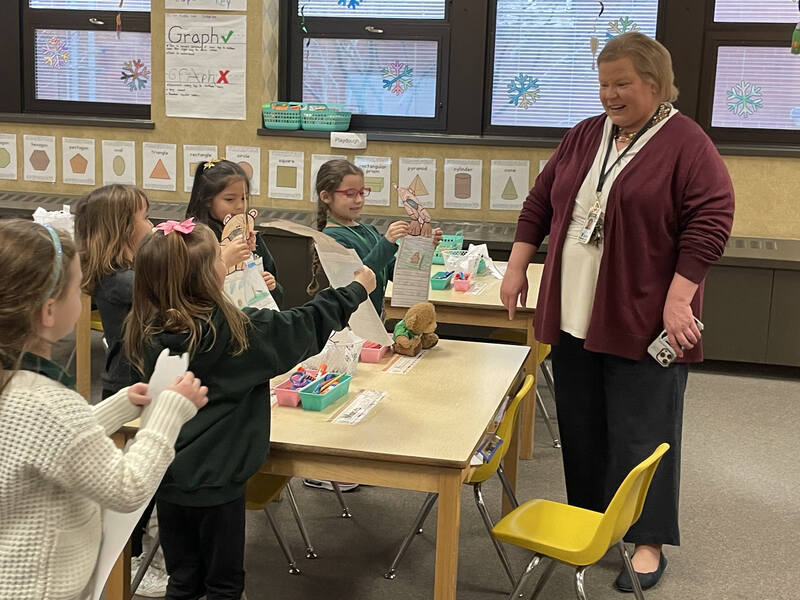
But the change didn’t happen all at once. English Language Learning teacher Heather Hobson says, “It was a long process started by first grade trying it out on their own.
“They were all veteran teachers, saying, ‘Oh my gosh, look at this. They’re getting it! You’ve got to come see this.’ It really built that excitement. It prompted us to think, ‘Okay, let’s see what this is all about. I want to feel that sense of excitement too, and see that growth.’”
Students noticed it as well.
“One of the things the first grade teachers were most excited about,” Pearson says, “is that the kids were excited about it. There was a shift in how they were learning and they were more excited about doing it. I feel like that was a big piece of it, seeing that the kids were more engaged, excited, and able to do more.”
“They were all veteran teachers, saying, ‘Oh my gosh, look at this. They’re getting it! You’ve got to come see this.'" -Heather Hobson, English Language Learning teacher, Nathan Hale Elementary
Proof in the Progress
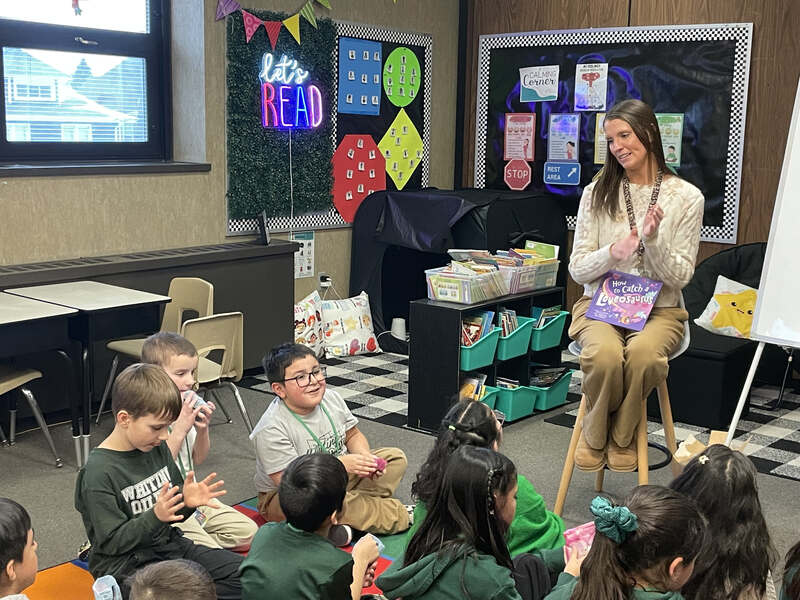
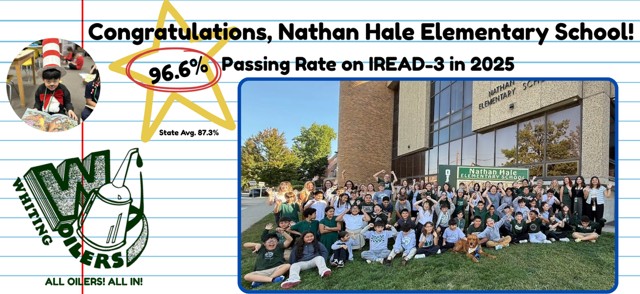
How much more? Nathan Hale’s IREAD-3 achievements help tell the story. The school increased its third grade passing rate by 13% over two years and surpassed the 95% goal, hitting 96.6%. All the school’s English Language Learners passed, as did 93% of students receiving special education services. In just one year, the school saw an 18% increase in the number of second graders passing.
District coach Liz Prieboy credits much of that progress to the staff’s mindset. “The teachers’ willingness to jump on board and try new things was key.
“The majority of the staff, no matter what grade level they were in, were doing the science of reading modules that were coming out from the Indiana Department of Education,” Prieboy says. “And we have a ton of people that are in the process of working on their Literacy Endorsement, and many have completed it.”
Teaching Smarter, Not Just Harder
That openness to learning translated into classroom results. The Reading Team began noticing encouraging differences: student groups were decoding more effectively, and students returning after summer break showed stronger retention. Teachers found they could begin aiming higher with second and third grade intervention groups.
To better understand what they were seeing, staff shifted to more systematic assessment of every student.
“We’ve always collected data. But we changed the way we were collecting it using oral reading fluency and some decoding inventories,” Prieboy says. “We made it a priority that every student in this building was going to be individually assessed every quarter in their reading.”
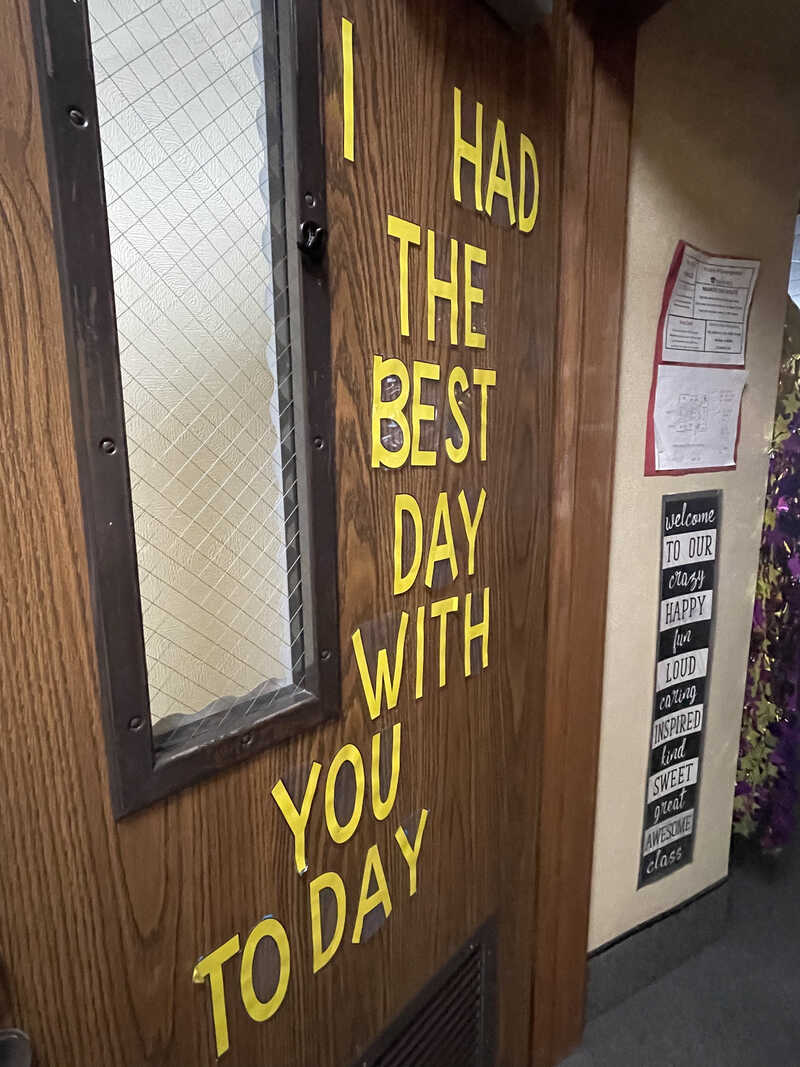
Those results became the foundation for the school’s regular data meetings, where teachers, specialists, and support staff worked through student progress together and adjusted instruction accordingly. The conversations focused not just on scores, but on the children behind them.
At those meetings, Prieboy says, what stands out most is how deeply teachers know each student — not just their data points, but their strengths, struggles, and individual needs across subjects.
For the staff, that commitment is tested every day, especially when students face difficult circumstances beyond the classroom.
“We always approach it as, ‘Okay, we’ll try again tomorrow,’” Pearson says. “It’s a reminder that we’re going to keep working and that we’re making a difference.”
That persistence is part of what made broader progress possible. As a result of the school’s literacy practices and data-informed decision-making, improvements are showing up in other subject areas as well, especially math. The approach is helping students build skills and confidence across the curriculum.
“We always approach it as, ‘Okay, we’ll try again tomorrow.’ It’s a reminder that we’re going to keep working and that we’re making a difference.” -Julie Pearson, principal, Nathan Hale Elementary
Bringing Families Into the Story
Supporting students also meant supporting the families behind them. Nathan Hale teachers are intentional about partnering with families and helping students get the support they need at home.
During parent side-by-side sessions, teachers showed families exactly how they teach reading, demonstrated UFLI activities, and shared practical ways to support those skills at home. Participation in these sessions exceeded 90%.
One especially popular effort involved “before-bedtime boxes” — decorated kits containing books, writing tools, math routines, and simple activities designed to build nightly learning habits.
“It was just showing the parents that this could be fun,” Pearson says. “It doesn’t have to be sitting down at the table and forcing it. These boxes help families have activities they can do before bed to develop those routines.”
Literacy Night has become one of the school’s most anticipated traditions. Families rotate through grade-level stations with themed activities. Students leave with books, and families gain new strategies to try at home. The evening offers a chance for students, families, and teachers to come together around reading without the pressure of conferences or grades. Many parents now ask about it at the start of each school year.
“It’s just a really good time to come together around literacy to build those relationships in a non-threatening way,” Pearson says.
From Classroom Gains to Community Pride
What started inside the school didn’t stay there for long. Soon, Nathan Hale’s success was impossible to miss.
The city of Whiting erected a billboard on its main street to showcase second and third grade students and staff who participated in IREAD-3. It became part of many residents’ daily commute. And the mayor, fire chief, and police chief attended the assembly launching the school year to recognize student and staff achievements and share pride in their success.
Recognition and Reflection
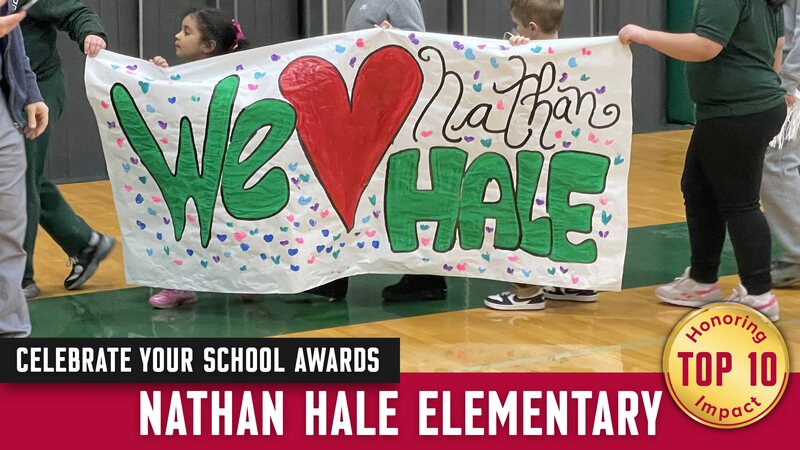
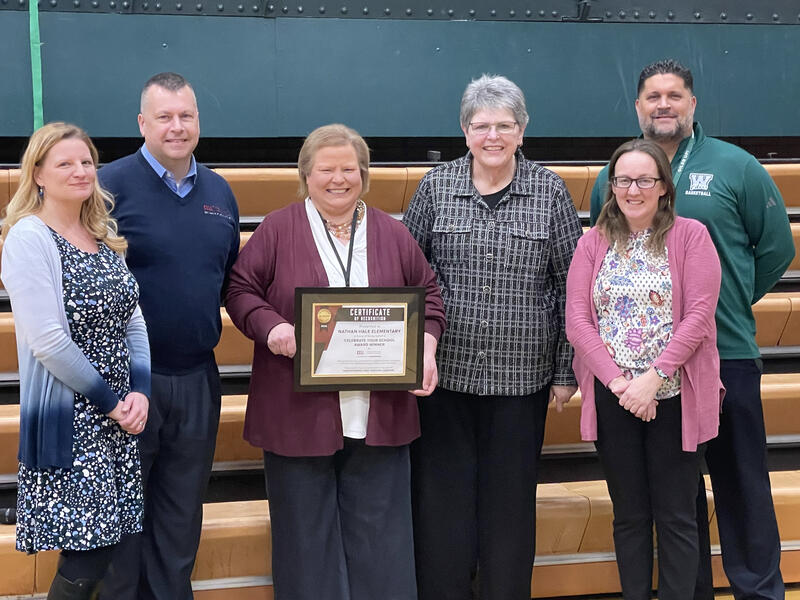
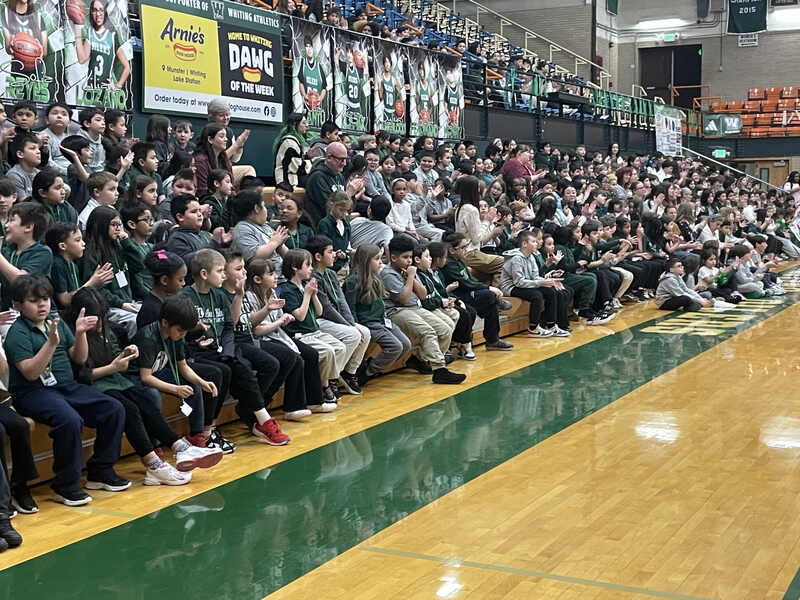
Months later, that same pride filled the school gym — packed bleachers, banners, a school mascot, and the band playing. Students, teachers, and administrators gathered to honor Nathan Hale’s recognition through CELL’s Celebrate Your School Awards for its literacy gains.
For Pearson, the moment reflected growth that had taken place long before the spotlight.
“I especially appreciate your CELL team,” she says, “because the training and resources I’ve received have helped me grow as a school leader in an area that I didn’t feel strong in.
“I’ve always focused more on the ILEARN grades and felt confident working with our teachers at those grades because it’s what I knew and felt most comfortable with. I didn’t have as much knowledge or training in early literacy, and I felt like I wasn’t supporting those K–2 teachers the way they needed, despite recognizing that they are the foundation of learning at those grade levels.
“The past two years we’ve been able to grow as a K–2 team, a 3–5 team, and a school-wide team to improve our practices, support each other in our learning, and see our kids soar.”
But the moment that captured what Nathan Hale had truly built came when a student stepped to the microphone.
“All of our amazing staff each have a unique personality, and that helps us all learn in different ways,” Victoria said. “If you are struggling, they will always be available to help you. They cheer you on and never give up on you — no matter what the problem is.
“There could be a bunch of reasons why Nathan Hale is amazing, but the biggest one is our amazing staff and students.”