Educator Development
Student Impact
School-Wide Practice Change
CELL’s Work in 2025: Initiative Expansions, Conclusions, and What Comes Next
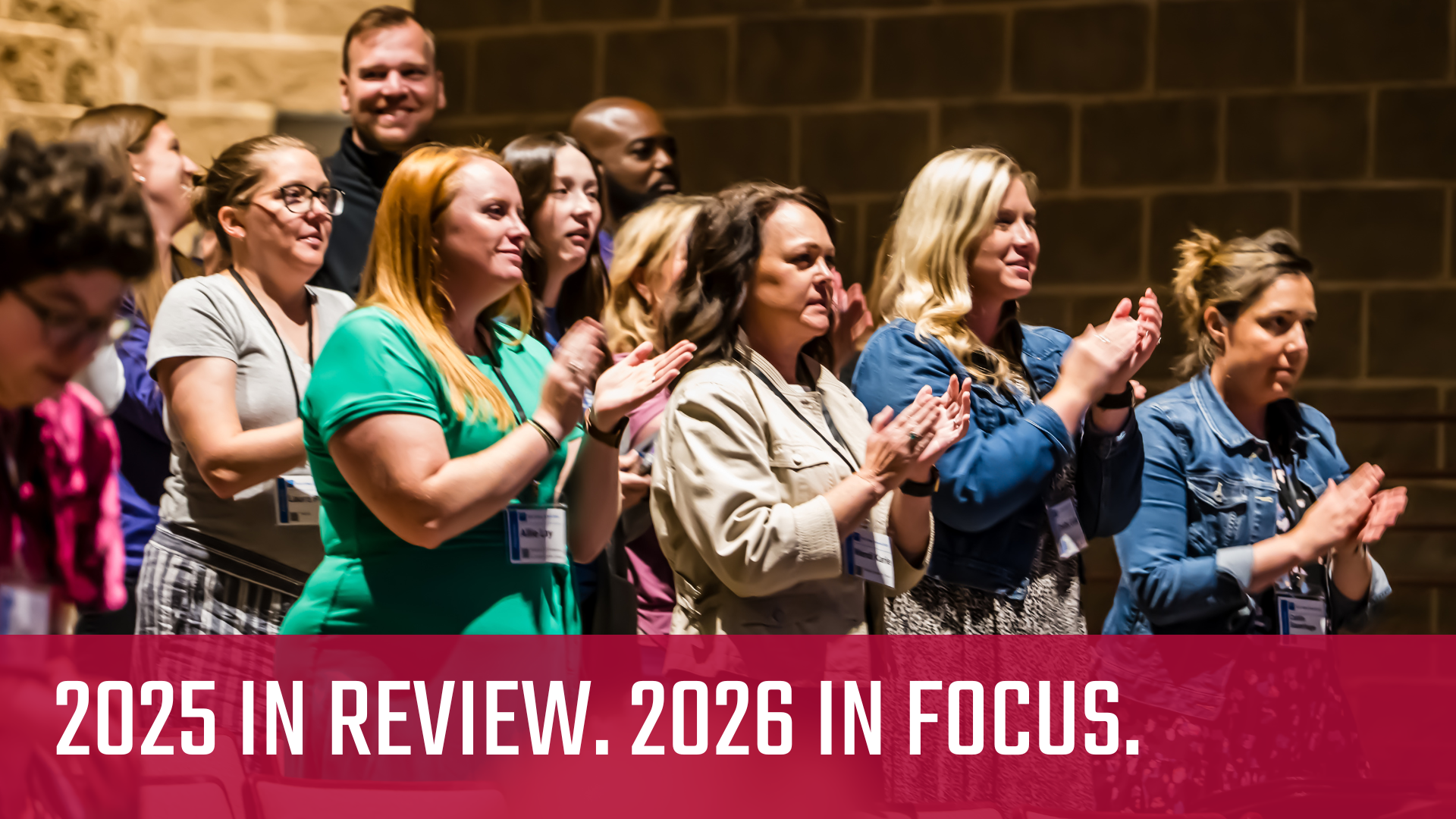
The year closed the chapter on some long-running initiatives, scaled proven work, and set a clear direction as CELL enters its 25th year of transforming lives through learning.
Across Indiana, CELL’s work showed up in classrooms and communities in ways that advanced teaching, learning, and leadership in 2025. Grounded in research-based practice, these efforts served 1,062 schools across 346 districts statewide. The impact strengthened instruction and expanded educational opportunities for thousands of Hoosier students.
A sense of movement defined the year. Some initiatives reached their intended conclusions, while others gained traction or opened new avenues for collaboration. CELL strategically expanded college and career access, improved teaching practices, and supported meaningful academic progress. But just as important, the last 12 months clarified the way forward, helping CELL align its work with where Indiana’s schools and educators need support next.
Join us for a look back at the year’s accomplishments and a look ahead at what’s taking shape.
CELL served 1,062 schools across 346 districts statewide in 2025. The impact strengthened instruction and expanded educational opportunities for thousands of Hoosier students.
Advancing Postsecondary Pathways Across Indiana
CELL marked a major milestone with the successful completion of the Rural Early College Network (RECN) 1.0, a federally funded initiative launched in 2019 to expand the Early College model in rural Indiana. RECN combined coaching, credentialing support, and a network-based implementation model to help schools build sustainable programs aligned to postsecondary success.
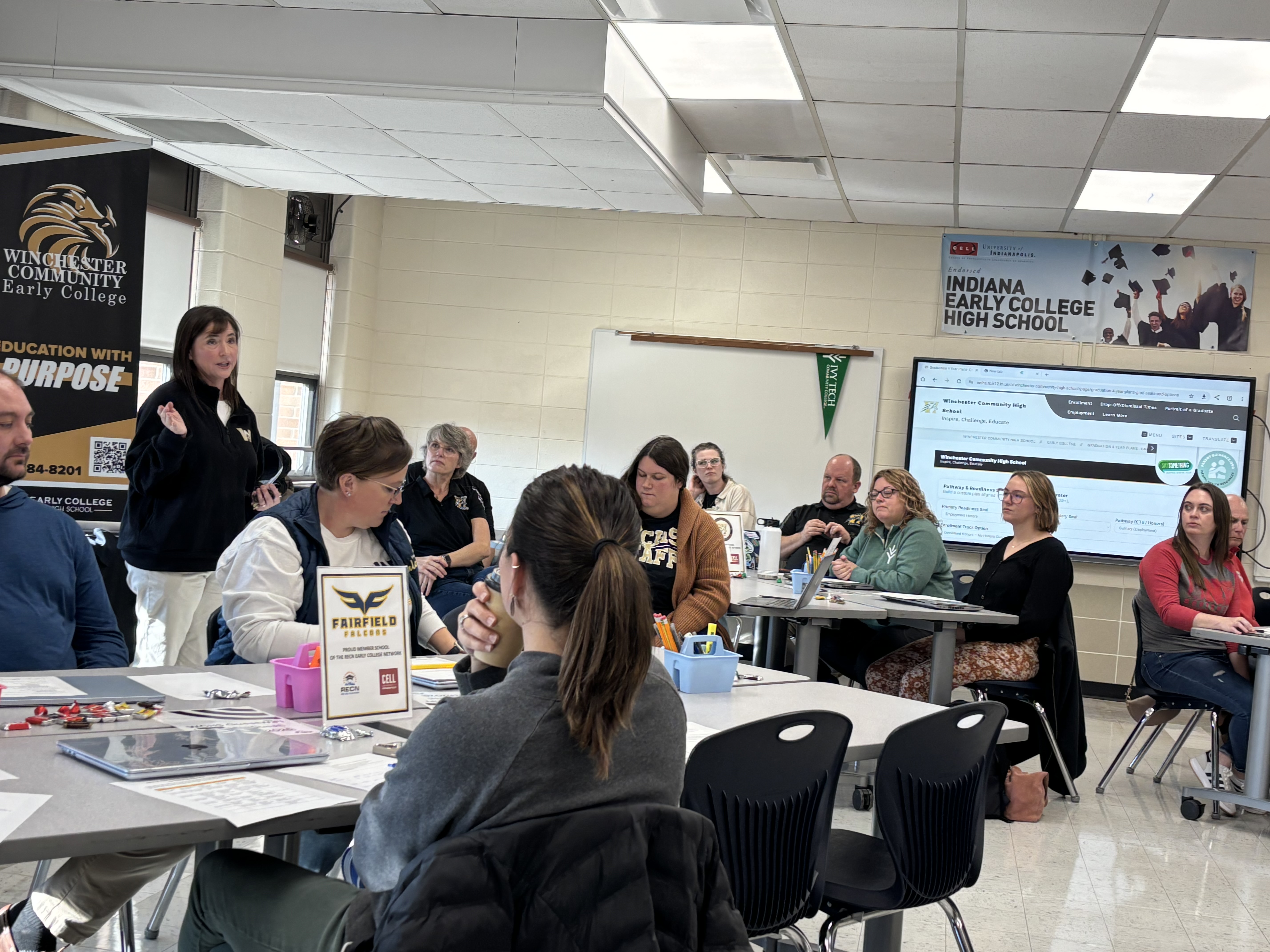
RECN 1.0 served more than 23,000 students, with 44% coming from socioeconomically disadvantaged backgrounds. All 15 partner schools achieved Early College endorsement and more than 125 educators from participating schools earned dual credit credentials. By the close of 2025, these schools had collectively saved students and families more than $15 million in tuition costs.
Building on this success, CELL secured a second round of federal funding to launch RECN 2.0, extending Early College opportunities to 15 additional schools. The grant builds on the previous model of pairing partner schools with experienced mentor schools as they work toward Early College endorsement, and adds a new component of professional development for dual credit teachers and school counselors.
Beyond the RECN grant work, Early College continued expanding statewide. By year’s end, 67 high schools held Early College endorsement through CELL, including 10 new schools added during the 2024-25 academic year.
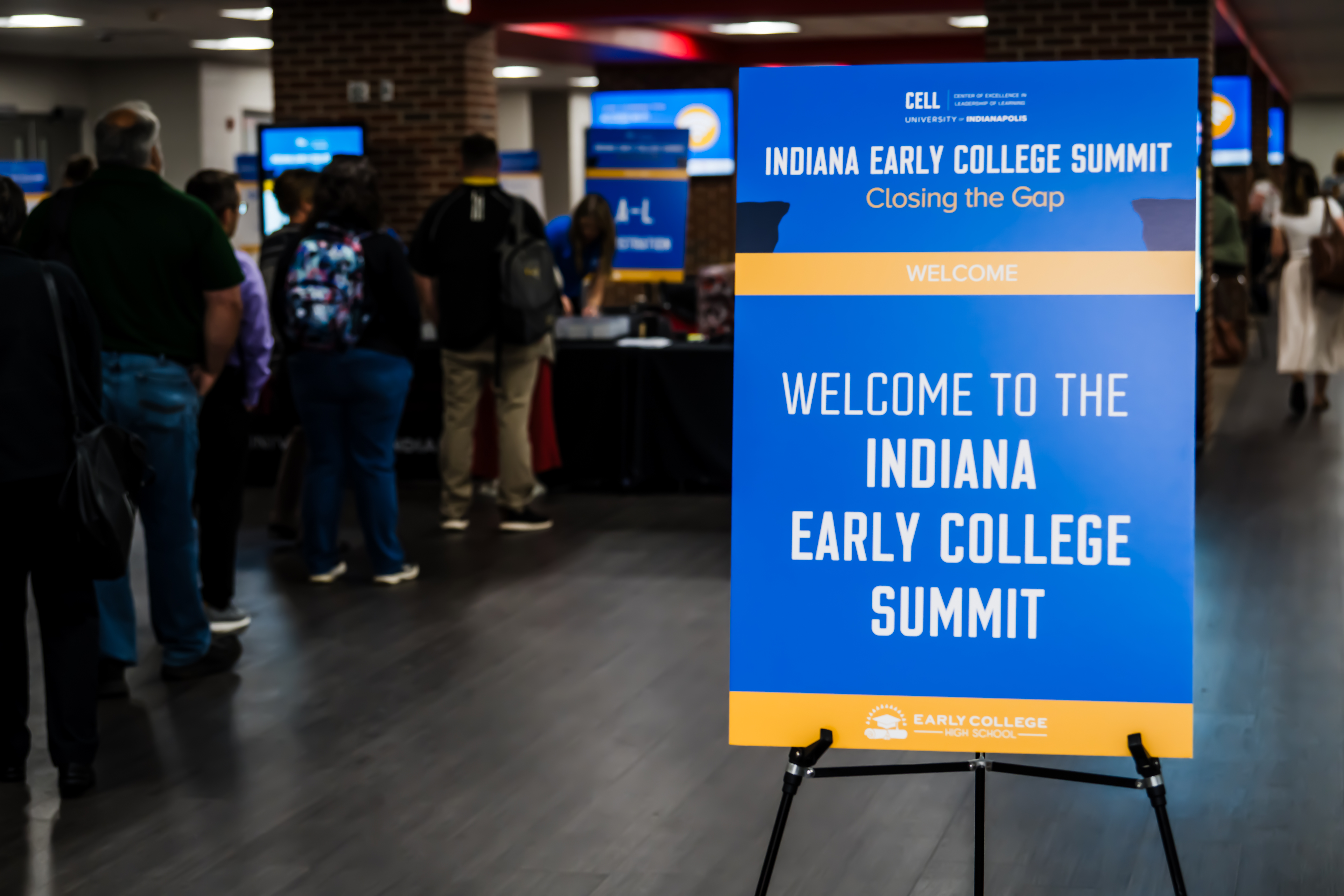
CELL’s Indiana Early College Summit served as a key event for driving model adoption. Year three of the Summit posted the largest numbers to date, with nearly 500 people in attendance. A significant portion of participants came from schools new to this work that have since begun the implementation process.
CELL became an intermediary for the GRAD Partnership on two national initiatives, supporting the Indiana-based work centered on improving college access. The Connectedness Project uses research-based strategies to strengthen students’ sense of belonging at three Indianapolis Public Schools high schools—Crispus Attucks, Arsenal Tech, and George Washington—through coordinated professional development and technical assistance. The Student Success Team project focuses on helping schools design high-impact support structures, data systems, and monitoring practices to improve student outcomes.
Strengthening Career Readiness Through P-CAP
CELL’s Pathways to Careers and Postsecondary (P-CAP) initiative continued its growth in 2025, adding four locations and bringing the statewide total to 15 participating high schools.
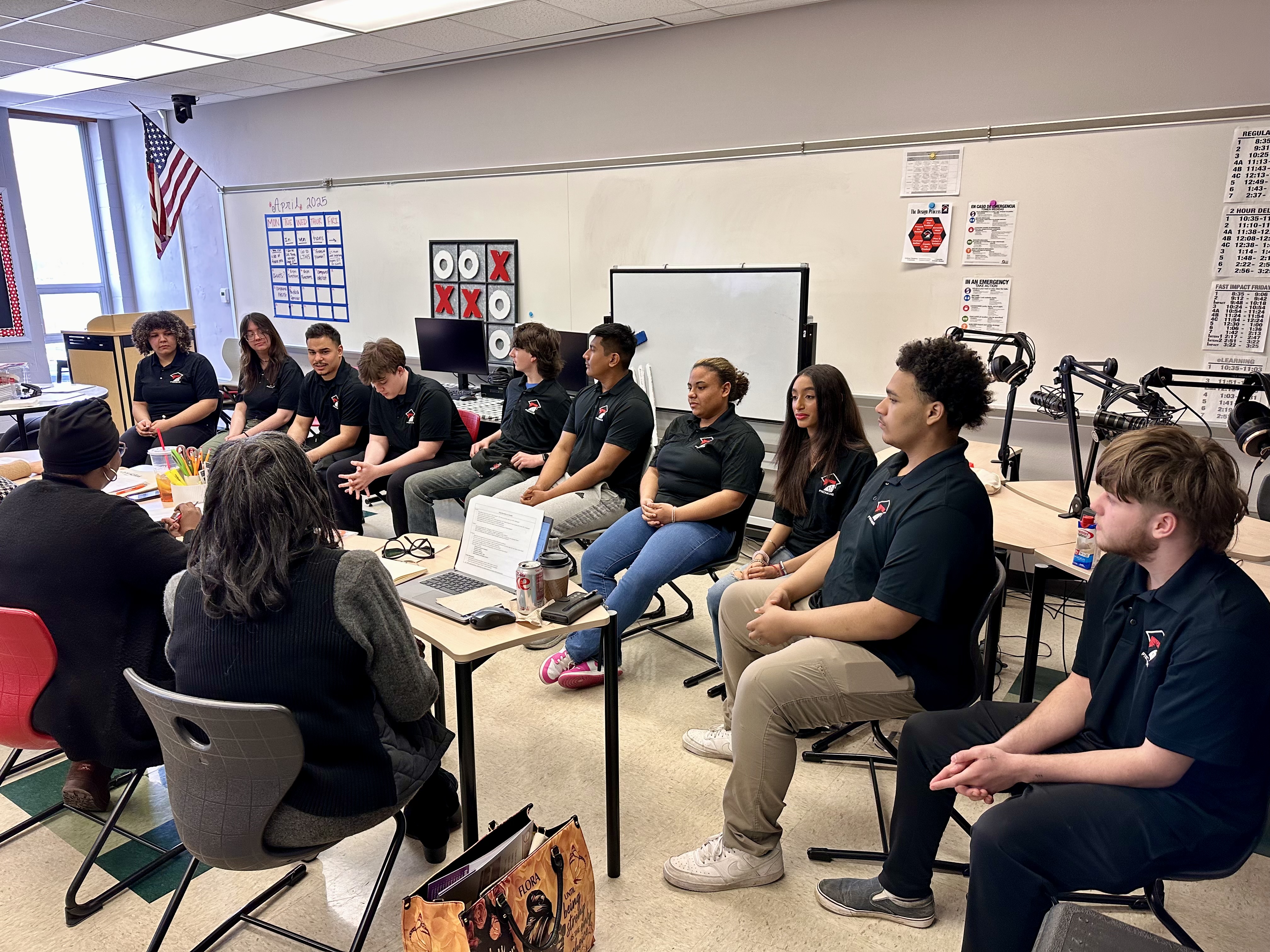
Designed for students disengaged from traditional school structures, P-CAP blends relationship-centered learning with real-world application. Students participate in Career and Technical Education (CTE) pathways, earn stackable workplace credits, and access dual credit opportunities. Beginning in ninth grade, they also engage with industry partners through quarterly workplace learning challenges.
Early results show promise. Data from the first cohort of P-CAP schools revealed average student grades increased from a C+ to a B, while average days missed were cut in half between the end of eighth grade and the completion of ninth or tenth grade.
Such positive results attracted attention. The Indiana Department of Education’s Work-Based Learning Task Force visited Logansport High School’s P-CAP program, and CELL hosted a study visit of nearly 100 educators, industry partners, and policymakers at Winchester P-TECH.
Expanding Educator Credentialing and Expertise
CELL’s licensing and credentialing initiatives reached important conclusions and new milestones in 2025, reflecting long-term investments in educator quality and workforce development.
The Indiana Teachers of English Language Learners (I-TELL) initiative concluded on a high note—exceeding its initial goal by nearly 50%. Launched in 2022 through support from the Indiana Department of Education (IDOE), I-TELL enabled 299 teachers across 115 school districts to complete graduate coursework toward English as a New Language licensure.
The Indiana Special Education Assisted Licensure (I-SEAL) initiative, in partnership with IDOE, continues to address Indiana’s need for highly skilled special education teachers. By the end of 2025, I-SEAL had served nearly 1,400 teachers since its inception, with 936 educators earning their special education licensure—368% above the program’s initial target. The initiative remains highly active with an average of 100 teachers enrolling in the program each semester.
I-SEAL has served nearly 1,400 teachers since its launch, with 936 educators earning their special education licensure—368% above the program target.
Indiana’s credentialing challenges extend beyond special education. High school educators teaching dual credit courses must meet specific requirements set by the Higher Learning Commission (HLC), the accrediting body for degree-granting postsecondary institutions in Indiana and 18 other states. Teachers need to hold a master’s degree in the discipline they teach, or a master’s degree in another field along with 18 graduate credit hours in the relevant content area. These requirements, while essential for maintaining academic quality, have long created access and cost barriers for educators seeking dual credit credentials.
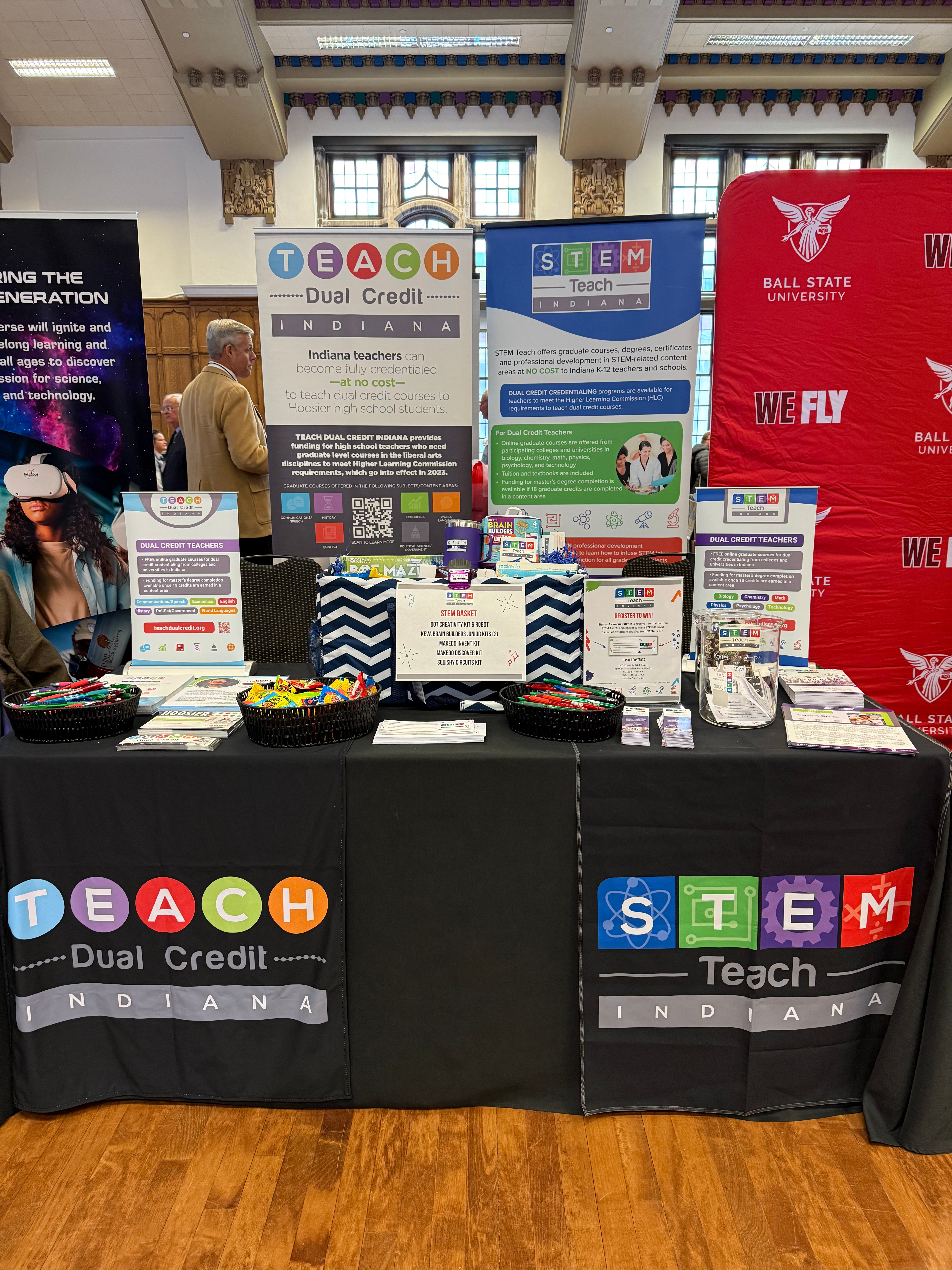
STEM Teach and Teach Dual Credit Indiana were designed to address this issue by covering tuition and textbook costs for teachers pursuing the graduate coursework needed to meet HLC requirements. Over time, both initiatives removed barriers at scale, opening pathways for thousands of educators to earn the credentials required to offer dual credit opportunities to students.
After 12 years of impact, STEM Teach concluded in 2025, having supported more than 2,000 educators through graduate coursework, certifications, workshops, and scholarships. In its final year, 49 teachers completed dual credit credentialing in STEM fields, 35 earned master’s degrees, and educators completed 340 STEM-focused courses. CELL administered the program, in partnership with the Indiana Commission for Higher Education (ICHE), with funding provided by the Indiana General Assembly.
Teach Dual Credit Indiana also concluded its five-year run at the end of 2025. During its final year, the program funded 861 course completions, supported 150 teachers in earning dual credit credentials across six content areas, and helped 40 educators complete their master’s degrees. INvestEd through ICHE provided funding for Teach Dual Credit Indiana.
Collectively, these initiatives strengthened teacher quality, deepened professional engagement, addressed high-need content areas, and expanded student access to postsecondary education. They delivered impact where it matters most: in classrooms, with students, to change lives.
From Research to Results: Improving Literacy Across Indiana
Literacy remained a central focus for CELL in 2025, with continued expansions of the Indiana Literacy Cadre and broader literacy services aligned to the science of reading.
The Indiana Literacy Cadre, a statewide strategic initiative in partnership with IDOE, launched its fourth cohort, serving 238 schools in 2025 and eight additional districts and organizations. In total, 418 schools have now participated since the Cadre’s inception. These efforts coincided with historic statewide progress. Indiana rose to sixth in the nation for fourth-grade reading on the 2024 National Assessment of Educational Progress—its highest ranking to date—after climbing from 19th place. While national average scores declined, Indiana students posted a three-point gain.
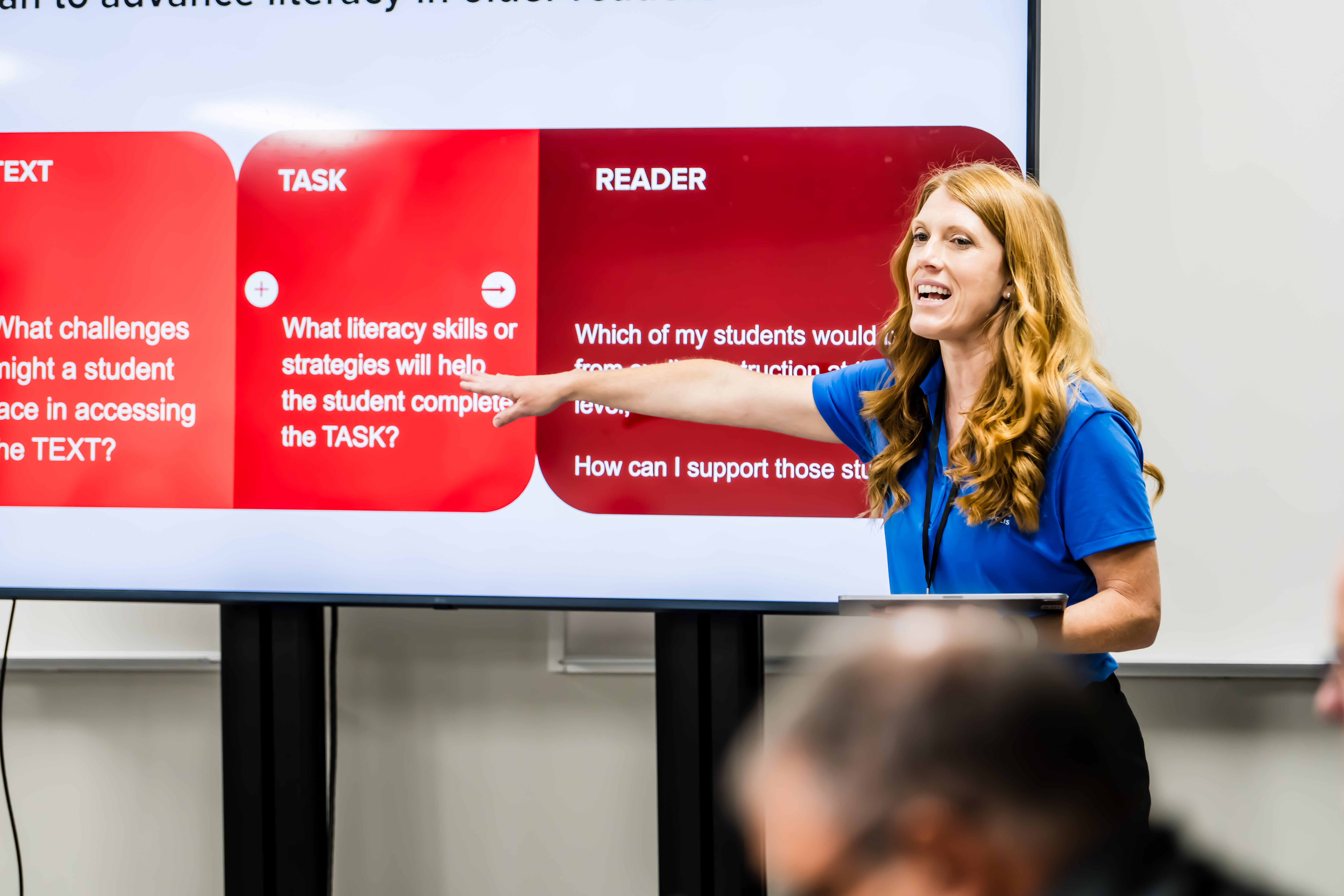
State data reflected similar improvements. The 2024-25 IREAD assessment showed an almost 5% increase in third-grade reading proficiency, reaching 87.3%. This marks the largest single-year increase since IREAD began in 2013 and the fourth consecutive year of improvement. Schools participating in the Indiana Literacy Cadre saw a 7% increase in students passing IREAD, nearly double the gains of non-participating schools.
Beyond the Cadre, CELL expanded its Literacy Services work to additional schools and organizations. This included providing technical assistance to Ivy Tech Community College’s educator preparation program through comprehensive course reviews, professional development, and accreditation support. Partnerships also extended into the community, including a collaboration with United Way of Central Indiana to strengthen ReadUP, a volunteer-based literacy initiative for third-grade students.
At the statewide level, CELL convened educators through events and learning opportunities, including a collaboration with a national technology organization and a bi-monthly literacy webinar series that reached nearly 900 educators and leaders, including many from beyond Indiana’s borders.
Bringing the Science of Learning to Classrooms
For the 2024-25 academic year, CELL launched the Cognitive Science Academy in partnership with InnerDrive—one of the first programs of its kind. Instructional teams participated in nine expert-led masterclasses exploring topics such as cognitive load, spacing and retrieval practice, interleaving, and metacognition.
Building on the initial success, CELL expanded the Academy for the 2025-26 school year with a new individual learning model, creating additional access for teachers and school leaders interested in deepening their understanding of the science of learning.
More than 75 people participated in the hybrid course, with 66 completing the requirements for the Science of Learning micro-credential. Participants reported stronger connections between research and classroom practice, reinforcing CELL’s commitment to translating evidence into action.
A Legacy of Change and a Future of Possibility
Looking back on 2025, something important stands out: Indiana’s education landscape is changing in significant and complex ways. Emerging technologies, shifting workforce needs, and rising expectations are reshaping how students gain knowledge and how educators lead, adapt, and support learners at every stage of life.
Indiana’s education landscape is changing in significant and complex ways.
In 2026, CELL’s focus is on helping educators meet this complexity with clarity and purpose. That includes deepening leadership development for school administrators, aligning instruction—particularly in math—with the science of learning, and broadening how education is supported across generations.

Technology, especially the rapid growth of artificial intelligence, will play a defining role. The question isn’t whether AI will be used in education, but how. CELL is committed to helping educators build not just technical proficiency, but the discernment to know when automation can enhance learning and when human insight, expertise, and connection must lead.
This work does not happen in isolation. As part of the University of Indianapolis, CELL is connected to an institution committed to innovation, partnership, and operating as an engine for change. That relationship strengthens CELL’s ability to translate research into practice and align initiatives for broad education reform.
We’re proud of what was accomplished in 2025 and clear-eyed about what lies ahead. The changes taking shape are not incremental. They represent a broader shift in how education works—raising the bar for how it serves communities, responds to change, and prepares learners for life beyond the classroom. CELL stands ready to meet this moment, shaped by 25 years committed to excellence in the leadership of learning.