School-Wide Practice Change
Brick by Brick: How Hobart High School Is Rebuilding Expectations for an Entire Community
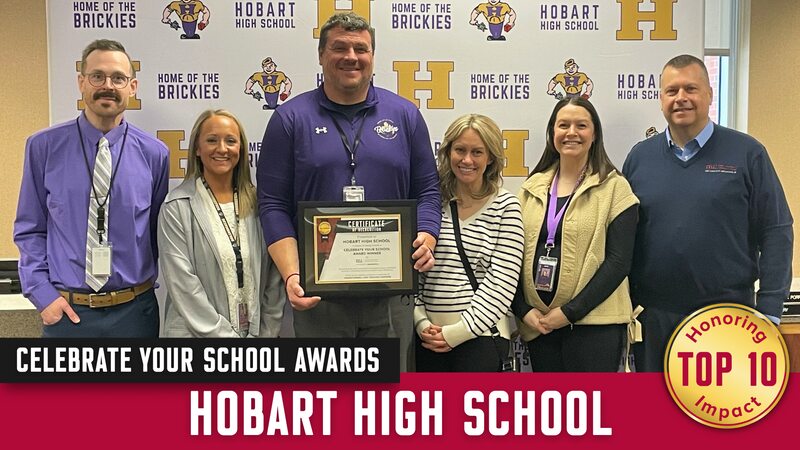
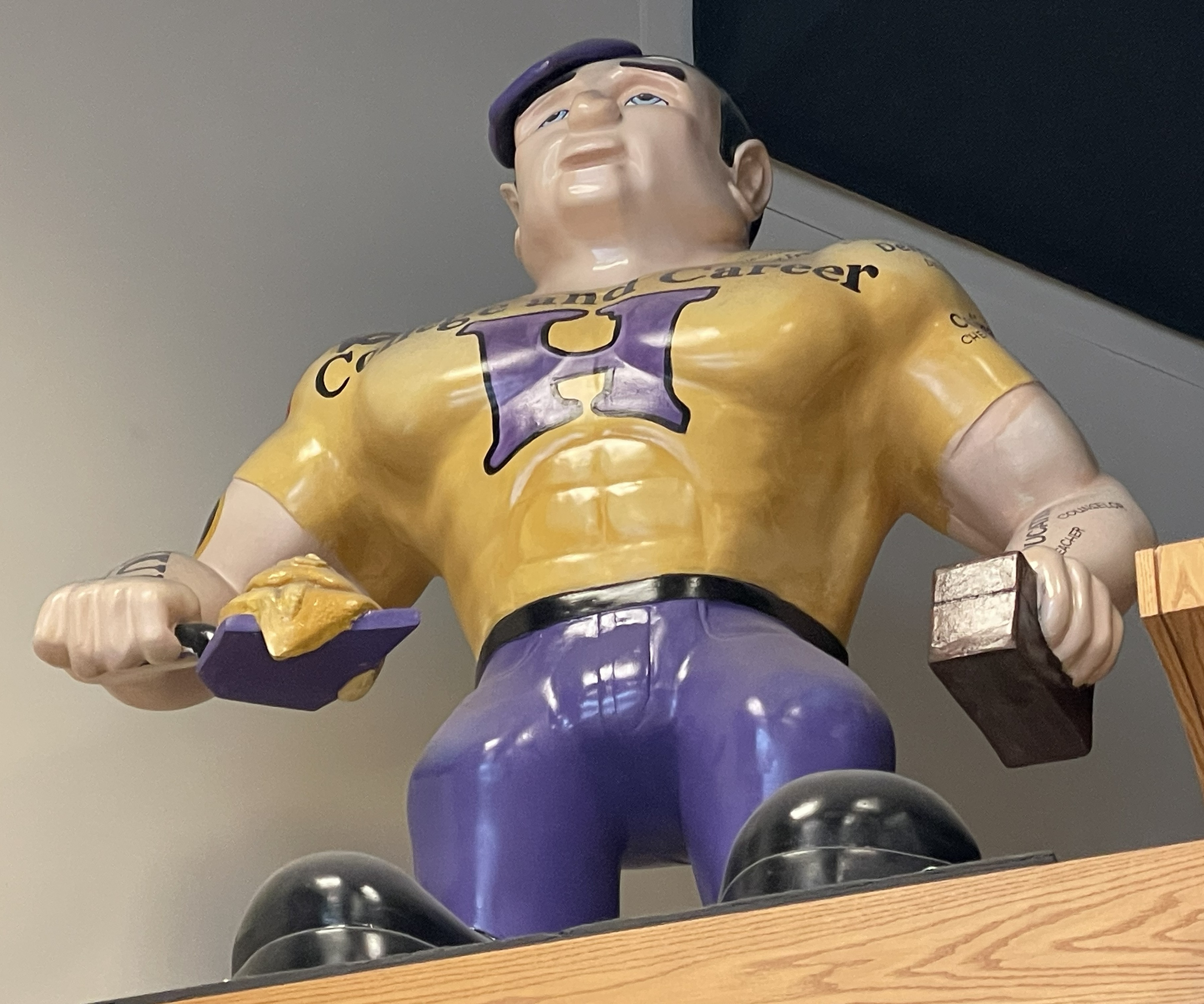
At Hobart High School, the Brickie mascot is more than a nod to the city’s brickyard past—it reflects a school deliberately constructing opportunity. Students are earning college credits, industry credentials, and associate degrees before they graduate, reshaping expectations for themselves and their community.
The phrase “another brick in the wall,” made famous by Pink Floyd, once criticized schools that treated students as interchangeable parts of a system. At Hobart, the phrase carries an entirely different meaning. These Brickies are building something better—laying foundations, brick by brick, for college, careers, and a stronger future.
A School Recognized for Expanding Opportunity
As part of the CELL’s 25th anniversary celebration, the Celebrate Your School Awards spotlight partner schools that are setting a higher standard for what student success can look like. Hobart stands out—especially during Career and Technical Education Month—for its leadership in Early College and its intentional expansion of career pathways. This is not incremental change. It’s a deliberate redesign of opportunity.
Named for its city in the far northwest corner of Indiana near Chicago, Hobart is aligning that redesign with the realities of its community. In a region where postsecondary attainment has not always reflected students’ full potential, Hobart has strengthened its Early College and pathway system. Today, more students are earning credentials that open doors to both college and career—often before they graduate.
From Dual Credit to Deliberate Design
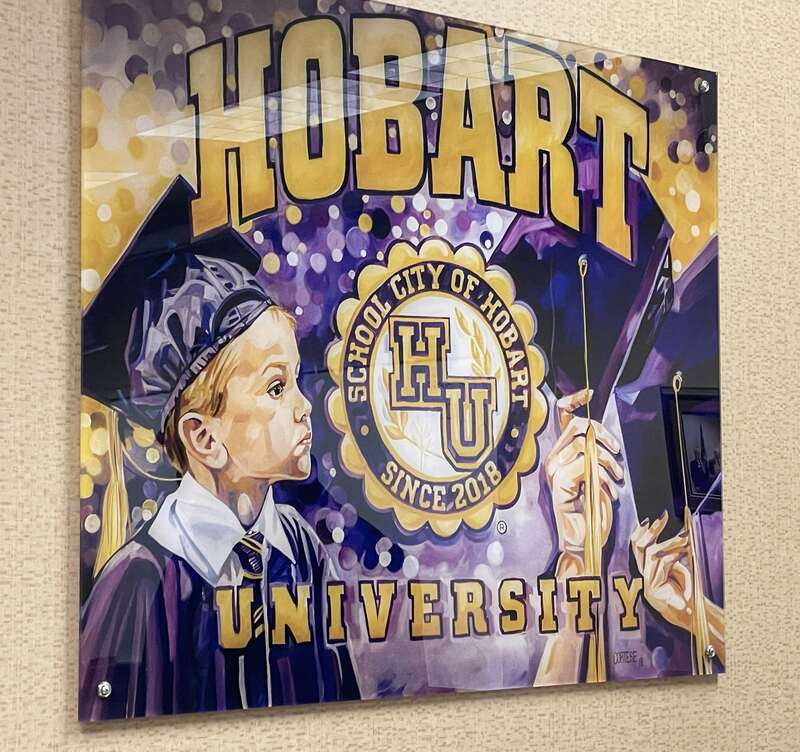
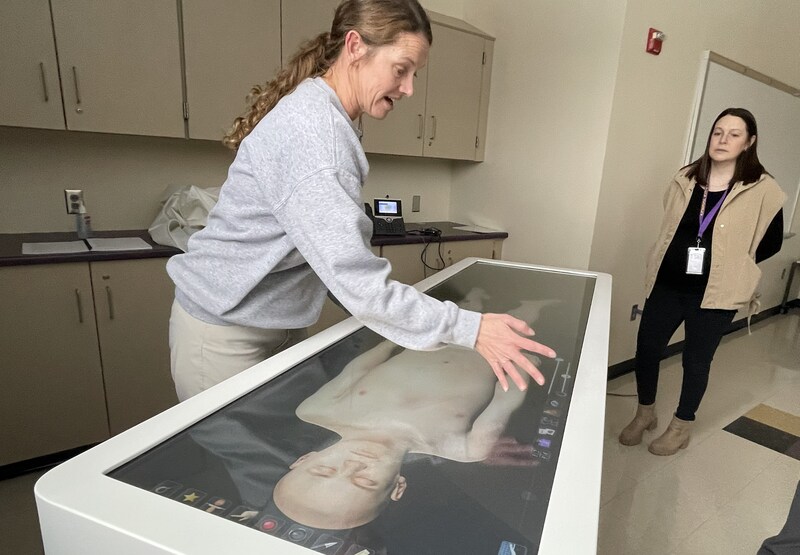
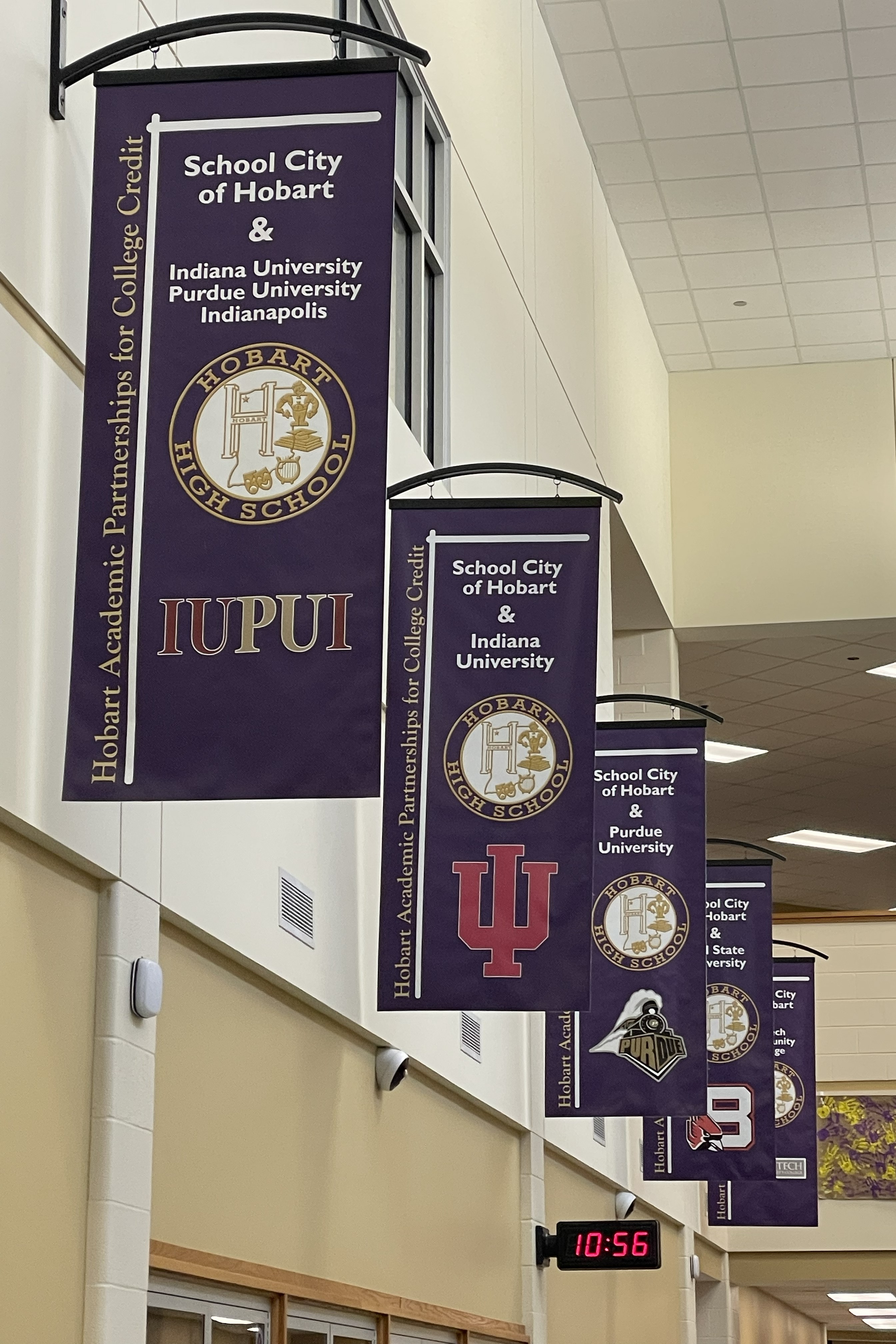
Hobart University, the school’s Early College program in partnership with Ivy Tech Community College, allows high school students to earn college credits, certificates, or associate degrees. It has created multiple career pathways and provides its Brickies with training for postsecondary and careers while taking high school classes. For example, students pursuing work in education after high school have the opportunity to work at Brickie Kidz Preschool. Those considering careers in healthcare are able to do clinicals and work with the Anatomage Table, an interactive 3D anatomy-visualization system. Hobart’s Celebrate Your School monetary award from CELL will help purchase a mannequin for its new Licensed Practical Nurse (LPN) pathway in partnership with the local hospital.
“We have moved far beyond ‘random acts of dual credit,’” Timothy Krieg, director of secondary curriculum and instruction for School City of Hobart, says, “to a focused effort on deepening staff capacity, so that more of the right students are able to access and complete credentials as they prepare for careers.”
The resulting successes can be seen across the board. Credential earners increased across every minority group and among students in poverty. The percentage of low-income students who successfully earned a career credential rose from 27% to 44% in a single year.
Such success is particularly significant in Hobart, where only about 18% of its residents hold a college degree and more than half of students qualify for free or discounted meals. College is often not part of a Hobart family’s history, so Early College credits and credentials can truly change the trajectory of students’ lives. Whether students continue their education or enter the workforce, such a solid head start saves them time and money—and boosts confidence and readiness.
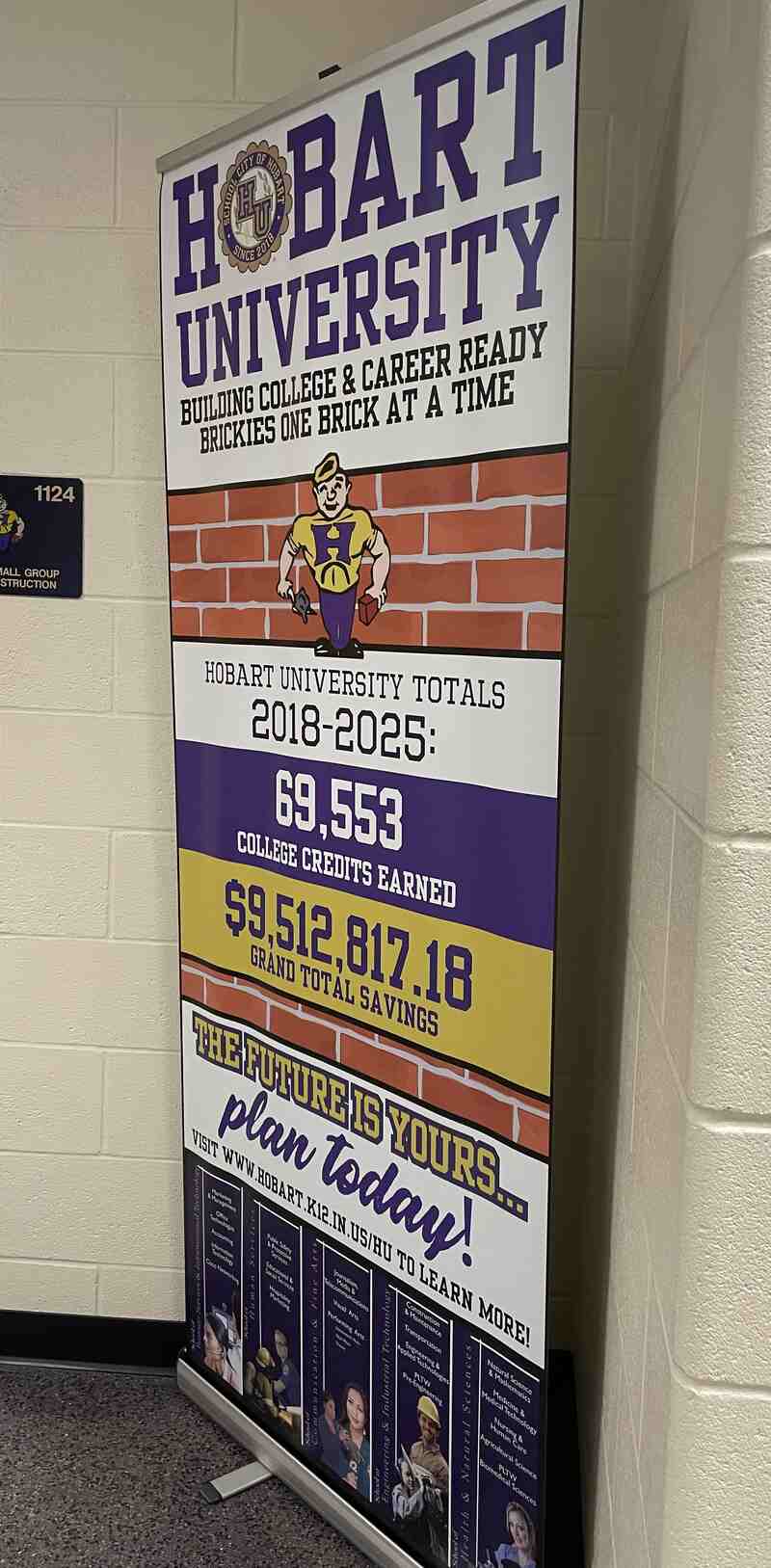
Hobart University launched less than a decade ago, in 2018. Already, participating Brickies have earned some 70,000 college credits. Total tuition savings is approaching $10 million.
Graduation Looks Different Now
“Our graduation is pretty cool,” Colleen Newell, Hobart High School co-principal, says. “‘All right, who has the Indiana College Core? Who has an associate degree?’ We have all those kids stand, and they wear special regalia.
“It’s impressive, the number of kids who graduate from here with that,” she adds. “My daughter will be in high school next year, and she’s already taking a couple of classes to make sure she can get into dual credit.
“For our community, it’s key.”
Brooke Paschen, Director of Early College & Careers, adds, “We have staff who wish that their kids had gone here because of how much their kids had to do in college and what they could have saved by going through our Early College program. They have said that their kids didn’t have half the opportunities, even at a school with Advanced Placement and International Baccalaureate. Even with those cool programs, they didn’t have the dual credit piece.
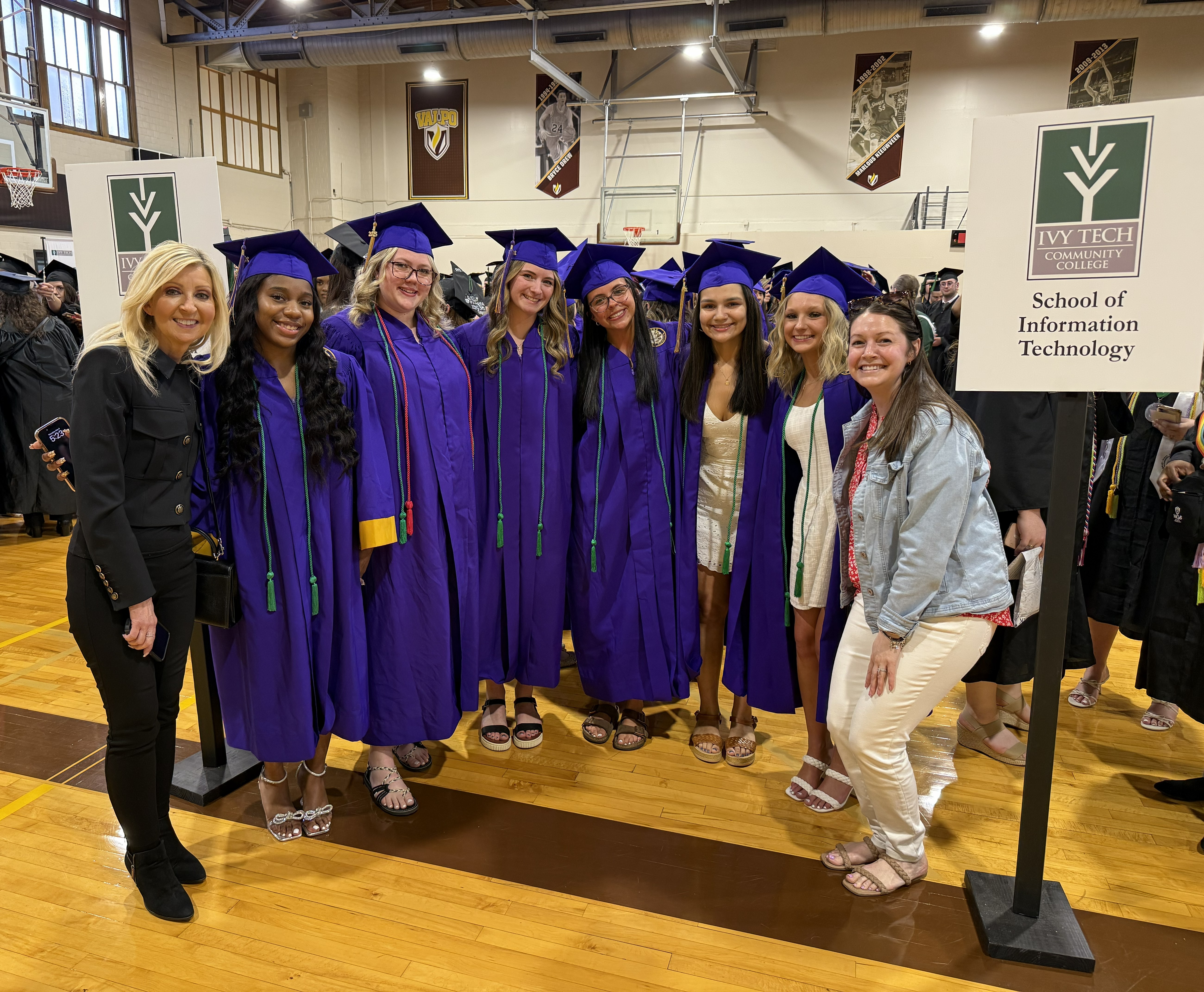
“For the class of 2026, right around 74 students will be graduating with an associate degree, out of a class of about 300. And combined with students graduating with the ICC, we’ll be in the 90s. We’re shooting for 100 soon.”
An All-In Commitment
Hobart’s success, staffers are proud to point out, comes from an all-in mentality. K–12 classroom teachers lay the foundation, aligning instruction and expectations so college readiness becomes a lived experience, not just a label. Counselors, graduation coaches, and college/career coordinators keep students and families informed, on track, and encouraged as they navigate rigorous pathways.
Principals and assistant principals at every level, along with central office leaders, collaborate on master scheduling, staffing, professional learning, and partnerships. Support staff—instructional aides, office staff, technology teams, and library/media specialists—remove barriers and keep daily operations running smoothly.
Hobart’s administrative team is also quick to credit bus drivers, food service workers, and custodial/maintenance teams as valuable parts of the equation, ensuring students arrive safely, are fed, and learn in welcoming spaces. Each role is individually distinct, yet collectively essential to ensuring every Brickie thrives.
Making Learning Relevant
Such support adds up, and students have taken notice. “They may ask, ‘Why am I doing this? Why do I need geometry? Why do I have to take algebra?’” Principal Daniel Osika says. “But when they can see how math applies to how to become a pipefitter or a carpenter, I think it gives them more incentive to understand why they need to do this and the basic skills they need to have. When we can make that connection, they are more motivated.”
It’s all opening doors to family-sustaining careers and further education. Students pursue clearly defined career pathways and stackable credentials, including the Indiana College Core (ICC), associate degrees, and child development associate (CDA) credential. They can earn emergency medical tech (EMT) and certified nursing assistant (CNA) certifications, business administration and digital marketing credentials, maintenance and light repair certifications, welding, and energy technology certifications. What began as a handful of pathways has become a dynamic network of options—one that continues to grow with the community it serves.
Credentials as the New Expectation
A hallmark of the strongest career and technical education programs is their ability to evolve alongside economic trends, targeting high-wage, high-demand jobs that offer real opportunity for graduates. Hobart’s pathways reflect that same commitment. They continually expand and adapt in response to local workforce needs, feedback from higher education partners, and—most importantly—student interests and aspirations. Students routinely see presentations that normalize earning college credit and industry credentials as something Hobart students do now, not “someday” after graduation. By the time they reach high school, students already understand the opportunities available and can name specific paths they’re interested in.
It has all reshaped expectations for what’s possible for the Brickies of Hobart—starting with the youngest learners. Building capacity actually begins in the early grades. For staff, this work has created a shared sense of purpose and pride. Teachers and counselors now regularly talk with students and families about credits, credentials, and next steps—not as “extra” opportunities, but as part of what it means to be a Brickie.
For the broader community, where higher education has often felt out of reach or “not for people like us,” that perception is steadily changing. Each new ICC completer, associate degree earner, or industry certification holder from Hobart sends a powerful message: college and career credentials are no longer the exception—they are becoming the expectation for both students and community.
One staffer recalled that the late Steve Balash, himself a Hobart Brickie and a longtime teacher and coach, often said, “‘The harder I work, the luckier I get.’ That captures the Hobart approach: we work hard, stay nimble, and solve problems together.”