School-Wide Practice Change
CELL Announces Partner Schools for 2026 P-CAP Cohort
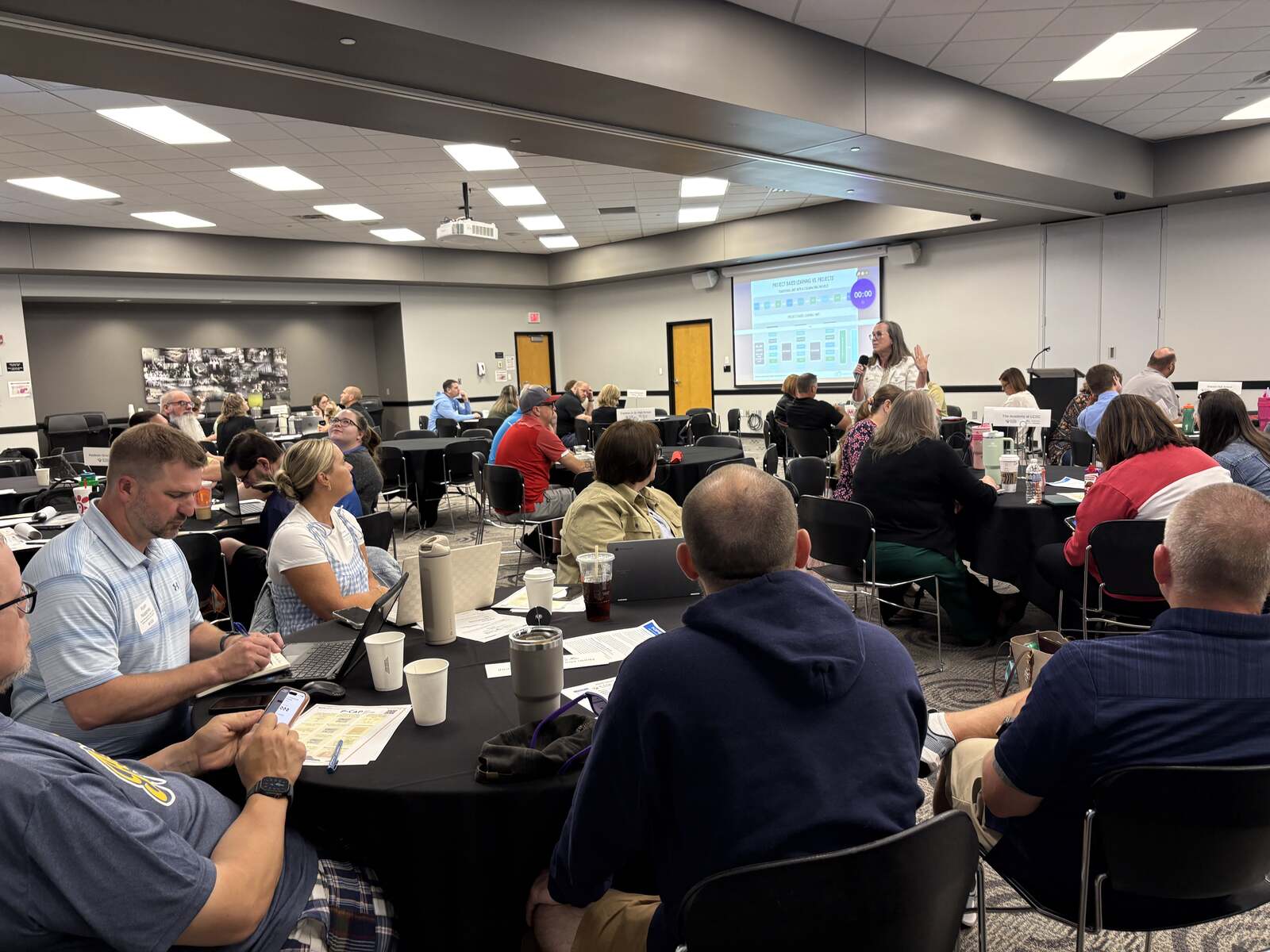
The Center of Excellence in Leadership of Learning (CELL) at the University of Indianapolis has named three partner high schools selected to participate in the next cohort of Pathways to Careers and Postsecondary (P-CAP) as part of a $2 million federal Rural Postsecondary and Economic Development (RPED) grant.
P-CAP is an innovative education framework designed for high school students with high potential who are disengaged from school and are at risk of dropping out. CELL will support these schools as they accelerate student engagement and pathway attainment through hands-on, relationship-centered learning, preparing students for in-demand industry careers in the local economy.
The following schools were selected for the 2026 P-CAP cohort:
- BELIEVE Circle City High School, Indianapolis, IN
- Decatur Township School for Excellence, Indianapolis, IN
- Madison Consolidated High School, Madison, IN
- Madison-Grant Junior/Senior High School, Fairmount, IN
“These schools understand that reaching every student sometimes requires rethinking how learning happens,” said Brooke Marsh, career readiness project coordinator at CELL. “Helping schools develop innovative approaches that improve student outcomes and meet workforce needs is central to CELL’s mission. P-CAP gives these schools another way to reconnect students with learning, build meaningful connections, and see a future they are excited to pursue.”

P-CAP was launched in 2022 through an Explore, Engage, and Experience (3E) grant from the Indiana Department of Education. Four schools were part of the initial pilot, and the model has now expanded to 19 Indiana high schools with the addition of the 2026 cohort.
Through a focus on hands-on, relationship-centered learning, P-CAP programs accelerate student engagement and achievement. P-CAP students experience integrated core classes with smaller class sizes, deepening relationships with faculty and other students. The program also brings industry partners into the high school experience through quarterly workplace learning challenges, connecting learning with real-world application beginning in ninth grade. Students have the opportunity to complete a Career and Technical Education (CTE) pathway while earning credentials of value and dual credit for college.
"We are especially excited about the potential to utilize the P-CAP program to support some of our more disengaged students,” said Ronnie Lawhead, principal at Madison Consolidated High School. “We believe this creates another meaningful pathway to help prepare students for a high quality of life after high school. Rather than allowing circumstances to dictate their future, this opportunity can provide students with the resources, skills, and support needed to make choices that positively shape their own quality of life.”
As part of the RPED grant, new cohort schools will align their P-CAP programs with valuable CTE pathways available to students. The funding will allow schools to designate a P-CAP classroom space with the equipment needed and cover some of the costs related to implementing the program, such as staffing, supplies, and professional development.
The Rural Postsecondary & Economic Development (RPED) project is being funded entirely through federal support, with 100% of the total project costs–amounting to $2,033,672–financed by federal funds. No portion of the project’s cost will be financed by non-governmental sources.