Educator Development
One Paragraph Makes Years of Work Pay Off at Winslow Elementary
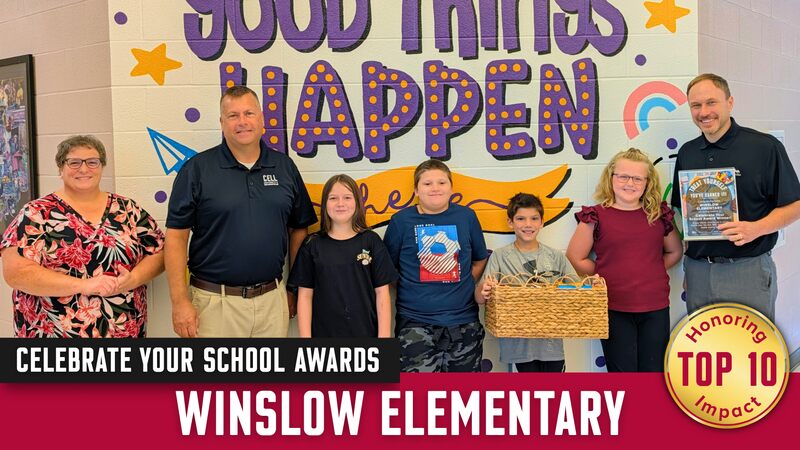
At Winslow Elementary, even the principal had some homework to do.
After years at the middle school level, Aaron Meyer found himself back at the ABCs of reading and writing—and questioning some assumptions about literacy that he’d brought with him.
He wasn’t the only one taking a fresh look at familiar practices. Winslow’s teachers were wrestling with a big question of their own: Why were students losing reading momentum as they advanced through elementary school?
Finding the answer would do more than reshape how Winslow taught reading. It would change how the school built understanding and buy-in for the tough work ahead.
As part of CELL’s 25th anniversary, the Celebrate Your School Awards spotlight schools across Indiana advancing teaching and learning in innovative ways. Winslow Elementary in Pike County earned the honor for making the “why” behind instructional change as important as the “how,” giving its educators a deeper understanding of their work and a stronger motivation to keep raising the bar.
The Homework Before the Hard Work
“You’re doing the best you can with what you know,” Meyer recalled telling Winslow’s teachers.
The challenge was figuring out what else they needed to know.
After more than two decades in education, Meyer had seen plenty of initiatives come and go. He didn’t want Winslow’s literacy efforts to become another program that faded when the next priority came along. The stakes were too high.
So, the school started by building understanding.
A year before joining the Indiana Literacy Cadre, Winslow began introducing the science of reading. Teachers had time to explore new approaches before incorporating them into daily practice. When the school introduced Heggerty, for example, they had an entire semester to experiment with the materials.

“Look, you’ve got time. Talk to your teammates. Try it out with the videos. Look through it yourself,” Meyer told teachers.
For Stephanie Sallee, a longtime Winslow educator who became the school’s literacy coach, that gradual approach was important. So was connecting the work to the students it was meant to help.
Sallee recalls Meyer beginning with the data: “Here’s what the problem is. Here’s where we want to be. We need to find a pathway to get there.”
But behind those numbers is what Meyer calls Winslow’s “why”—the children walking through its doors every day.
“We can’t have our fifth graders leaving unprepared and we can’t have our third graders not able to read because we know the trouble that creates later,” Meyer said.
Rather than prescribing the solution, teachers were given a role in creating that pathway. “It allowed the teachers to feel as if they were part of the journey and not just, ‘Here’s what I want you to do and here’s how to do it,’” Sallee said.
That sense of ownership was especially important as coaching became part of the process.
Behind the numbers was Winslow’s “why”—the children walking through its doors every day.
A Little Trust Goes a Long Way
The word “coaching” can make even experienced teachers uneasy. Would someone be watching their lessons? Judging their techniques? Reporting back to the principal?
When Winslow joined the Indiana Literacy Cadre, the initiative supported coaching and professional learning to strengthen instruction. But Meyer and Sallee knew the opportunity would only be as valuable as the trust teachers placed in it.
They emphasized that literacy coaching was student-centered, not evaluative. Teachers would help identify what they wanted to work on, using student data and classroom needs to guide the conversations.
Still, Sallee recognized that telling teachers coaching was supportive and letting them experience it for themselves were two different things. So, she started with volunteers.
A few teachers agreed to go through a coaching cycle first. When they finished, Sallee asked for a favor. “Would you tell your colleagues how it went?”
They did, and soon other teachers began reaching out to give it a try. By the second year, teachers were eager to participate. What emerged was a culture where teachers routinely sought one another’s input, shared strategies, and talked openly about challenges in their classrooms.
The investment in professional learning was substantial. More than 75% of Winslow’s teachers completed science of reading modules or Keys to Literacy training, while every member of the teaching staff participated in coaching. Sallee also had support of her own through the Cadre's teacher support specialist and community of practice.
And Meyer wasn't asking his teachers to do anything he wasn't willing to try himself.
He completed literacy training, sat in intervention groups, and sometimes worked directly with students. He wanted to understand not only what the research recommended, but what implementing it demanded of the staff.
“You can get a little ‘ivory tower’ sometimes when handing things down,” he acknowledged. “Everything works perfect when you’ve got it on paper and in your head.”
Training with the teachers gave him a different appreciation for the work. When someone said a new practice needed more time or a lesson wasn’t working as expected, he understood why.
That perspective helped him recognize when to push forward, when to slow down, and when to let some things go.
Thinking Outside “the Box”
Winslow’s growing knowledge and confidence were on full display when the district selected its reading curriculum.
In the past, the approach had been to purchase a boxed curriculum. This time, educators were equipped to do something different.
“We went through, piece by piece, and built our own curriculum,” he said.
Drawing on their new understanding of evidence-based literacy instruction, teachers and administrators retained successful practices such as Heggerty and UFLI while adding resources to strengthen vocabulary, writing, and comprehension.
The process wasn’t simply about choosing new materials. It was about knowing enough to ask better questions, reconsider common practices, and trust teachers to find the answers.
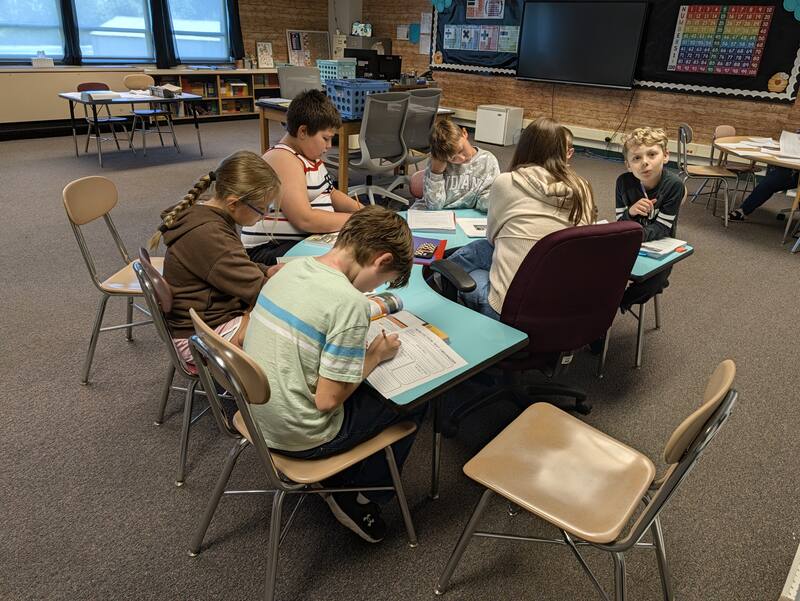
When data revealed a need for stronger vocabulary instruction, the school invited a respected fourth grade teacher to pilot a new resource. That classroom became a place where colleagues could see the lessons in action, ask questions, and consider how the approach might work for their own students.
And when teachers discovered that a vocabulary component was unnecessarily duplicative in kindergarten, the school adjusted rather than insisting that everyone follow the same plan.
Some decisions required tougher conversations. Winslow shifted instructional assistants toward the lower grades, leaving upper-grade teachers with less support. Meyer admitted it wasn’t an easy sell. But by explaining how stronger foundational skills would help students enter the upper grades better prepared, teachers got behind the decision.
Other priorities had to wait, too. Winslow was pursuing STEM certification at the same time it participated in the Indiana Literacy Cadre. Meyer recognized that the school couldn’t tackle everything at once, even when it meant moving some initiatives to the back burner.
“That buy-in, even from me, might be letting go of something that is a pet project or really important,” he said. “Being able to prioritize what students need in your building is key to making this work.”
For Winslow, that meant keeping literacy at the forefront and trusting, as Meyer put it, that “the focus is the focus.”
Throughout it all, the team relied on two qualities Sallee considers essential: flexibility and consistency.
Meyer had one more to add.
“And gas pedal,” he joked. “You’ve got to have it.”
The trick, they learned, was knowing when to use it.
“Being able to prioritize what students need in your building is key to making this work.” - Aaron Meyer, former principal, Winslow Elementary
The Proof Is in the Paragraph
One of the best signs that Winslow’s hard work was paying off didn’t come from a meeting or test score. It came from a group of first graders convinced they couldn’t write a paragraph.
Sallee invited Meyer to watch as she helped the students build their writing. They worked through the lesson, putting sentences on the board until, little by little, something significant appeared.
“We did that! We really did write a paragraph!” Sallee recalled them celebrating.

Meyer was just as impressed. Writing had been a persistent challenge for Winslow, and seeing first graders develop those skills was another reminder of Winslow’s “why.”
“This is real now! These first graders are getting this down. We’ve got a shot at this!” he said. Meyer described the moment as an acknowledgment of what the team had built and all the pieces locking into place.
There have been other signs, too. Winslow’s IREAD scores have risen. Teachers are making data-driven instructional decisions. The district is working to continue building-level coaching beyond the Indiana Literacy Cadre. Families are becoming more involved through literacy nights and schoolwide reading initiatives.
For Meyer, now assistant superintendent of Pike County School Corporation, another measure of success is the commitment Winslow’s educators have made to carry the work forward.
“If you changed a building’s daily practices, and it sustains, that’s huge. It shows that it matters. It shows that people bought into the why.”
But after years of work, that moment with the first graders left the biggest impression on Meyer and Sallee.
“We’re always looking at IREAD and ILEARN scores, but it doesn’t have as much feeling as seeing a kid get it,” he said. “This is why you do it.”