School-Wide Practice Change
Beech Grove Middle School Puts Culture First—and the Results Follow

Most schools see failure as a setback. Beech Grove Middle School treats it as feedback.

It may seem like an unusual philosophy for a school that recently caught the attention of the Indiana Department of Education for its academic growth. But spend time with the BGMS team, and it quickly becomes clear that their success started by being vulnerable about where they were struggling.
That mindset became the foundation of a schoolwide effort that has led to significant gains in math and English language arts, stronger student engagement, and a culture that became just as important as the numbers themselves.
As part of CELL's 25th anniversary, the Celebrate Your School Awards recognize Indiana schools that are advancing learning, supporting educators, and creating new opportunities for students. For Beech Grove, that recognition stems not from a single program or initiative, but from a system built from within that made improvement everyone’s responsibility.
Most schools see failure as a setback. Beech Grove Middle School treats it as feedback.
Who Do We Want to Be?
In math, fewer than one in five students were proficient, and performance in both math and English language arts remained well below state averages and the school’s goals. At the same time, BGMS was working to sustain improvement efforts after the conclusion of the district’s original partnership with the National Institute for Excellence in Teaching (NIET). Financial constraints meant instructional coaches returned to the classroom, leaving the school without some of the structures that previously supported professional learning.
Then Superintendent Dr. Laura Hammack launched an initiative to create a vision for the future of Beech Grove City Schools. She visited each school and asked a pivotal question: How do we see ourselves in the future?
For BGMS, the question carried extra weight. As the school considered its own identity, its students were at the stage in life to do the same.
Educators often refer to this as the "Middle School Slump," when motivation, confidence, and academic performance frequently decline. That reality played out every day with students who were figuring out where they belonged and what they were capable of.
How do we see ourselves in the future?
Improving test scores was important, but the team at BGMS saw that the opportunity was much greater than academics alone. Before they could change outcomes, they needed to create an environment where both students and teachers could grow.
Cracking the Culture Code
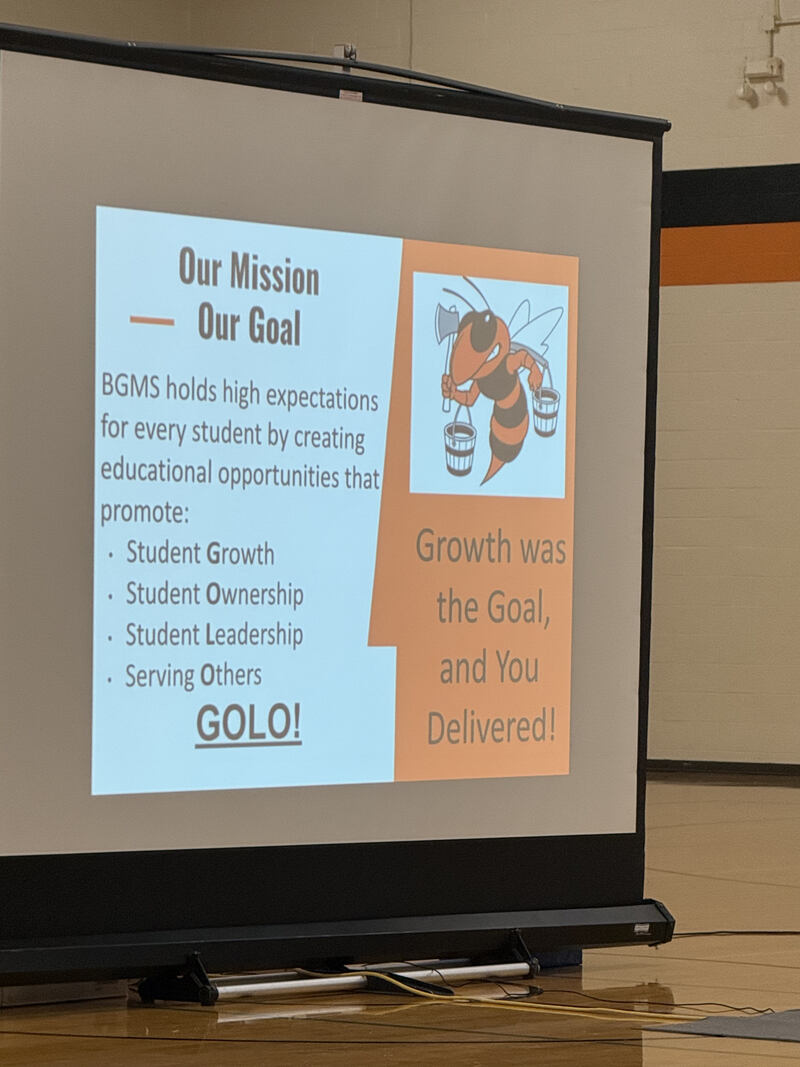
As a complement to the district’s initiative, the middle school created its own mission statement:
Beech Grove Middle School holds high expectations for every student by creating educational opportunities that promote student growth, student ownership, student leadership, and the service of others.
Around the building, it’s known by a much simpler name—GOLO.
One book that influenced the team's thinking was The Culture Code, which outlines the three foundational elements high-performing organizations need: safety, vulnerability, and shared purpose.
For Principal Ryan Morgan, creating that kind of culture meant changing how students and staff viewed failure. He frequently repeated Zig Ziglar’s phrase that failure is an event, not a person.
“For kids, especially middle school kids, it’s about getting them comfortable with failing,” Morgan said. “Failure is a springboard for us, not necessarily a pitfall.”
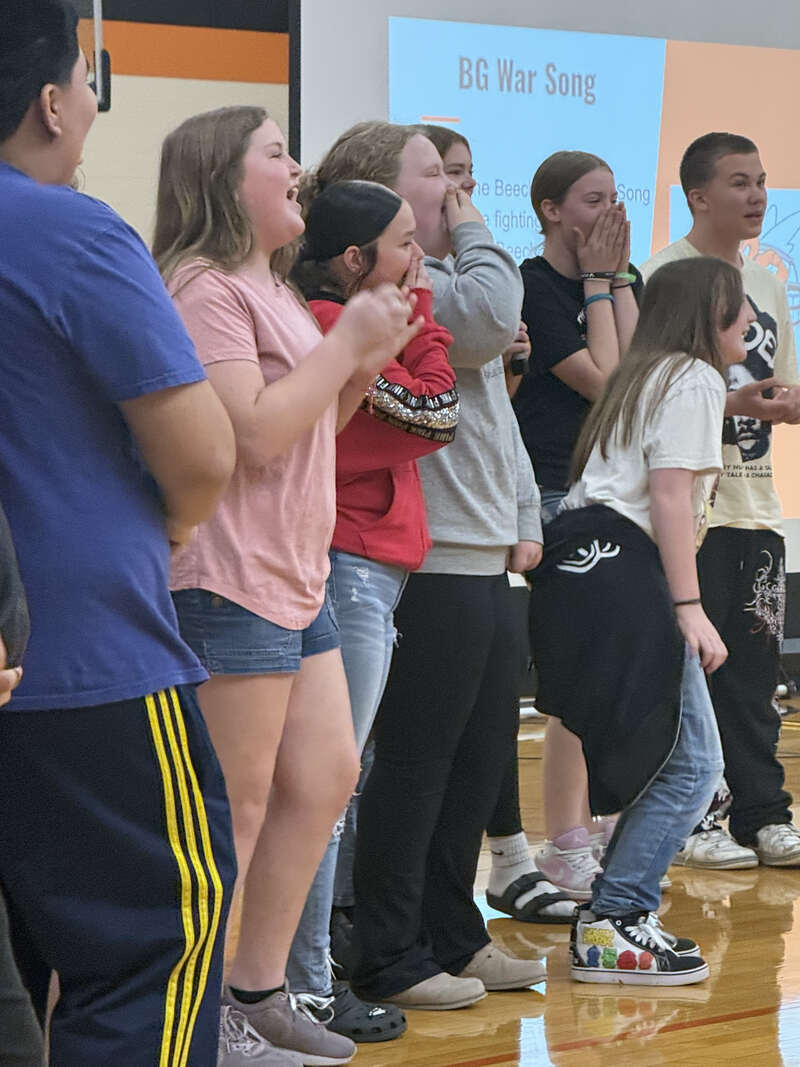
That opened the door for taking more risks. Inspired by the book’s discussion of music’s connection to culture, Morgan tasked Assistant Principal Daniel Jones with popularizing the “Beech Grove War Song”—an assignment even he wasn’t sure would succeed.
“There were a heck of a lot of staff members who thought, ‘This is weird. I don’t want to do this.’ I had to work with the staff and students, but I’m here to tell you that we have made the school fight song cool,” Jones said.
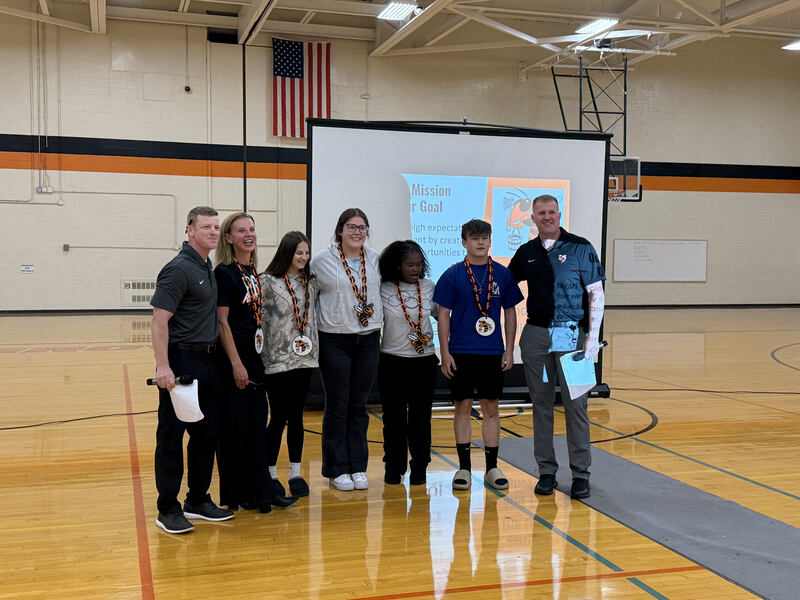
Today, they sing the War Song at games, celebrations and school events. During the school’s Celebrate Your School Award ceremony, more than 50 students volunteered to stand before their classmates and perform it.
"There is this safety thing,” Jones said. “To feel safe enough in a place to be a little bit goofy—that is what we’re going for. I think it was really important for our building culture to be able to put yourself out there and be a little vulnerable."
“Failure is a springboard for us, not necessarily a pitfall.” - Ryan Morgan, principal, Beech Grove Middle School
Speaking the Same Language
“Without the culture they’ve built, what I do wouldn’t even be possible,” said Kathy Keller, Beech Grove Middle School’s instructional coach.
When the district's second NIET grant concluded, the investment in instructional coaching didn't. Keller focused on the data, revealing where students—and teachers—needed support.
“We didn’t have a common language. We didn’t have a common purpose. We were operating in isolation,” Keller said.
Working alongside teachers, Keller modeled lessons, developed videos, and demonstrated effective instructional practices. She created resources, shared annotation strategies and graphic organizers, and analyzed student work with teachers to continually refine instruction.
“Without the culture they’ve built, what I do wouldn’t even be possible.” - Kathy Keller, instructional coach, Beech Grove Middle School
The first schoolwide strategy they focused on was using writing across the curriculum.
“To non-ELA teachers, writing was something that only took place in English class,” Keller said. “They didn’t realize how much writing shapes student thinking.”
Writing soon became part of every classroom. As students learned to organize and articulate their thinking, teachers gained a clearer understanding of what students knew and where instruction needed to change.
“It really just helped with that alignment and common language,” Keller said. “We still use the data we were using before. It’s just that the data’s now telling a different story.”
Making Every Minute Count
That data, along with teacher feedback, revealed an uncomfortable truth: a lack of foundational skills was the reason so many students were performing below grade level in math and English language arts (ELA).
“The problem is that if you don’t have the foundational skills, you can’t do the grade-level work,” Keller said. “But if you’re not teaching at grade level, the students can’t perform at grade level. We had to do both at the same time.”
The solution was to rethink the school day.
Leaders transformed iSucceed, the school’s homeroom period, into 35 minutes of targeted instruction, giving students dedicated time each day to strengthen foundational math and ELA skills while continuing to receive grade-level instruction in their regular classes. It also meant equipping every teacher—including social studies, science, and the arts—with the strategies and knowledge to reinforce those skills in their own classrooms.
The school also created common prep periods, giving teachers and administrators 80-minute blocks to collaborate, review weekly assessment data, and make instructional decisions together rather than in isolation.
For Morgan, the collaborative approach has been "an aha."
“The time we get to spend together allows us to work through areas where we need to grow and areas where we’re doing a really nice job,” he said. “We don’t always agree, which is awesome, because we’re able to provide different perspectives and lenses that help us get to better decisions.”
“The time we get to spend together allows us to work through areas where we need to grow and areas where we’re doing a really nice job.” - Principal Ryan Morgan
Partners in Progress
Most school improvement efforts focus on changing what adults do. Beech Grove Middle School didn’t stop there. It made students partners in the process.
Every student started the school year with a data folder. Throughout the year, they tracked attendance, missing assignments, grades, ILEARN checkpoint scores, i-Ready diagnostic results, and foundational skill growth. During iSucceed, they regularly reflected on that data.
At first, some teachers worried that showing students they were below proficiency would hurt their confidence.
"The presentation is so important," Morgan said. "This does not define who you are. How can we attack this number and get it better?"
Remember that failure is an event, not a person.
Jones saw awareness as the first step toward growth. "How do you improve on something if you don't know?" he said.
“This is my 29th year here,” Keller said. “This is really the first time in my entire career where we have been very consistent about them knowing their data.”
The change has transformed the way students view their progress.
“They are very, very invested because it’s now their data,” Keller said. “It’s not just some obscure score that doesn’t really mean anything.”
The data folders don't stop at the end of the school year. Seventh graders receive them back the following fall, while eighth graders take them to high school, giving students a record of how far they've come—and a starting point for where they want to go next.
This Is Who We Are
The proof Beech Grove Middle School's culture-first approach was working showed up in classrooms and hallways long before it appeared in gradebooks or on state assessments.
For Keller, one student became the clearest example of how much had changed.
"Last year we had a special education student who we weren't even sure knew how to write her name," she said.
By the end of the school year, the student had passed ILEARN. She was talking, interacting with classmates, and advocating for herself.
"She has just flourished," Keller said. "It's been because of the culture in our building and because she felt safe."
That same confidence was on full display during Beech Grove's first Math Olympics. Students spent weeks preparing, embracing friendly competition and celebrating growth in a subject that had once been one of their greatest challenges. They eagerly squared off against classmates, teachers, and even administrators.
"I had a girl come up to me and say, 'Mr. Jones, I struggle with subtraction just like you,'" Jones recalled. "I said, 'That's alright, girl. We're getting better!'"
"That's alright, girl. We're getting better!" - Daniel Jones, assistant principal, Beech Grove Middle School
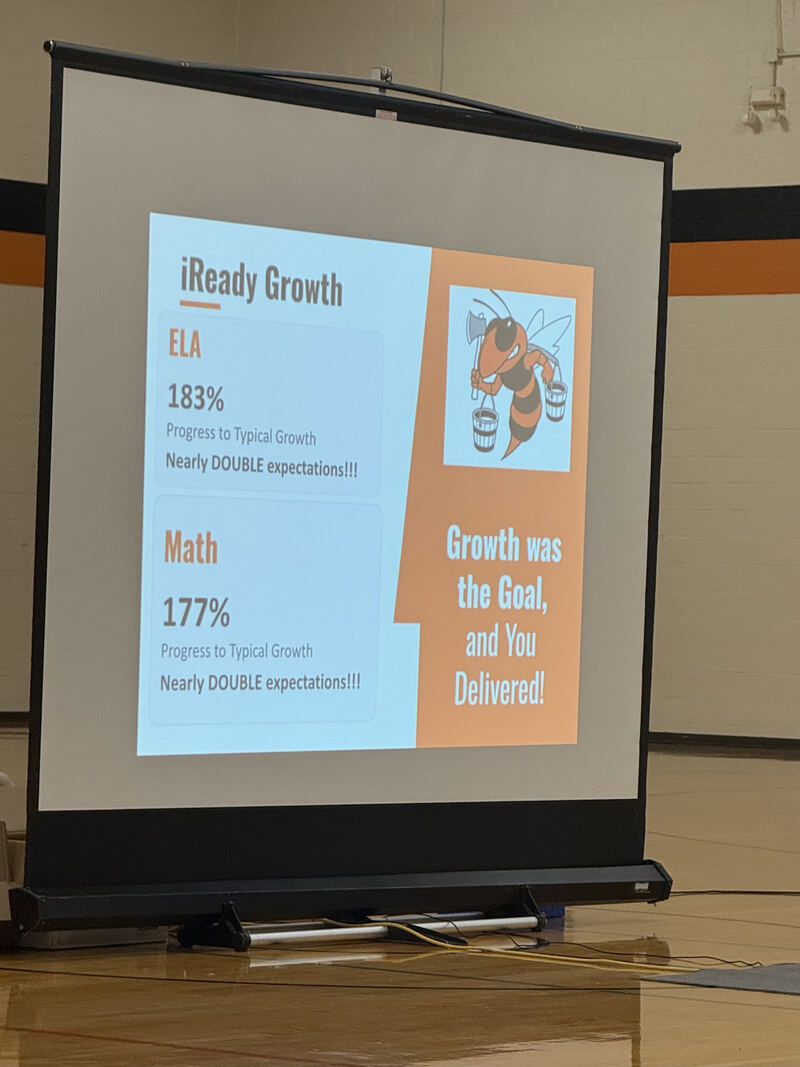
When state assessment and growth data arrived, they reflected exactly that. Students achieved 183% of expected growth in English language arts and 177% in math on the i-Ready Diagnostic—nearly double the typical rate. In math, the number of students reaching proficiency increased by 64% for one grade and 69% for another. More than one-fifth of students who began the year two or more grade levels behind in both subjects closed those learning gaps—an uncommon achievement.
"Common purpose, living on mission, culture, and instruction. I think those are always going to be our focus," Morgan said. "There may be a tweak here or there because we're always looking at the data."
With a smile, he added, "The day we come in and say, 'I think we've got it all figured out,' is the day it's all going to implode on us. So we're going to constantly look at refining, celebrating those small wins so that our kids keep getting better."
"Common purpose, living on mission, culture, and instruction. I think those are always going to be our focus." - Principal Ryan Morgan