School-Wide Practice Change
Differentiated by Design, United by Purpose: How Literacy Brought Howard Elementary Together
Principal Jordan Nelson used to think successful school improvement worked like a line of dominoes.
Remove every roadblock. Solve every problem. Finalize every detail. Then make the first move so everything falls into place.
Leading Howard Elementary in Kokomo, Indiana, changed his mind.
“If we had waited until we knew all of the answers before diving in,” he said, “we would still be climbing up the ladder of the diving board.”
With IREAD pass rates stuck in the 70s, Howard didn’t have time to wait for the perfect setup. What they needed was progress. And that required sometimes messy, often imperfect, undeniably difficult work.
But once they took the leap, they gained something even more valuable than higher reading scores: the confidence to do hard things—together.
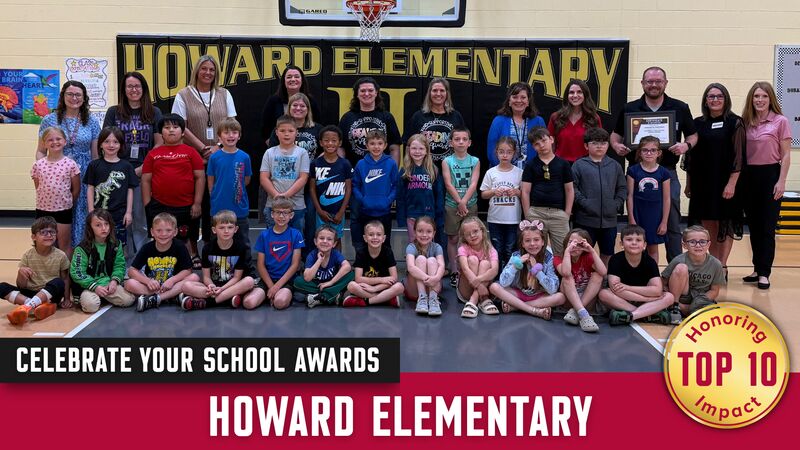
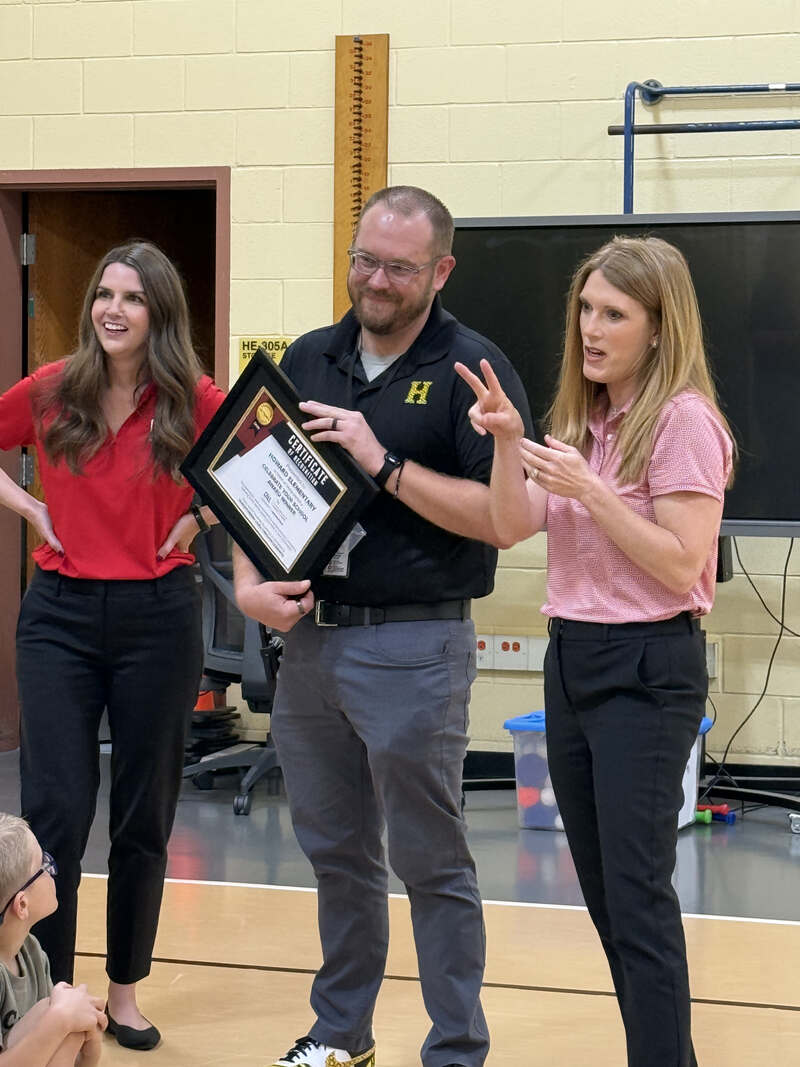
As part of CELL’s 25th anniversary, the Celebrate Your School Awards recognize schools across Indiana that are redefining what’s possible for students. Howard Elementary earned the honor for showing how a literacy initiative became the foundation for moving the entire school forward.
“If we had waited until we knew all of the answers before diving in, we would still be climbing up the ladder of the diving board.” - Jordan Nelson, Principal, Howard Elementary
Working Together, Separately
When Nelson arrived at Howard Elementary, several major instructional and curricular initiatives were poised to launch. He describes finding the right balance between urgency and focus “like drinking from a fire hydrant.”
To make it all work, the biggest obstacle wasn’t a lack of commitment. It was a lack of connection.
Title I teacher Diana Vanosdell describes the school then in a single word: “disjointed.” Educators across the building too often worked in parallel rather than in tandem. The Title I team called it living on “Lonely Island,” supporting classrooms without always feeling like they were part of them.
That separation showed up in everyday conversations. Students were often referred to as "my kids" instead of "our kids." While people in different educational roles knew the same children well, the school wasn't yet structured to bring those perspectives together for collaborative problem-solving and coordinated support.
The biggest obstacle wasn’t a lack of commitment. It was a lack of connection.
If Howard was going to improve reading achievement, it would require more than a new curriculum and stronger instruction. The adults first needed to find a way to become a cohesive team.
Go Slow. Scale Fast.
Howard’s literacy journey began a few years earlier with Orton-Gillingham (OG). The district first trained a shared elementary school reading specialist and Title I teacher in the approach. Howard then gradually expanded that knowledge across grade levels and special education. But the goal went beyond implementing a new program to building a better instructional system schoolwide.
The work gained momentum when Nelson and reading specialist Jodi Schoolman secured a science of reading grant. The funding brought literacy expert Dr. Jamey Peavler into Howard’s classrooms to model effective OG and morphology lessons and coach teachers on what strong instruction looked like. The grant also allowed the school to add literacy coach Darion Murphy to the team for ongoing support.
“That got more staff on board,” said Schoolman. “A lot of great connections happened through that and we’ve just been learning ever since.”
Engaging in the professional development soon sparked an even more ambitious idea.
What if Howard could differentiate OG during Tier I instruction?
The team envisioned three to four groups per grade level, based on Dynamic Indicators of Basic Early Literacy Skills (DIBELS), ranging from above benchmark to requiring intensive instructional support. With only two teachers per grade level, pulling it off would require significant changes.
Not everyone bought in. Some even thought it was impossible. Then the first grade team raised their hands saying, “We absolutely have to try this and figure out how to make it work.”
They agreed to pilot the model, acknowledging it wouldn’t be easy. Vanosdell calls it a very real moment when they accepted that the work might get “clunky,” lessons would not always go according to plan, and adjustments would be inevitable.
That honesty marked a cultural shift. Instead of waiting to unveil a polished solution, first grade gave the broader Howard team a place to learn, address challenges, and refine the model before expanding it to other grades. As Nelson put it, they chose to “go slow and then scale it fast.”
Priorities in Practice
Despite the potential pitfalls, by the end of the year, the first grade teachers gave the differentiated OG pilot their endorsement. Second grade teachers noticed how much the students had progressed and were the next to jump on board. One who initially resisted the idea of giving up some control over core instruction to other staff is now one of the model’s biggest supporters. Kindergarten soon asked to participate too.
But more grade levels and more instructional groups meant finding more time—and more people—to make the model work.
The master schedule became the backbone of the system and a daily expression of the school’s priorities. Nelson blocked a dedicated OG period for each grade level and coordinated classroom teachers, Title I, special education staff, and trained paraprofessionals so they could simultaneously lead and support differentiated groups.
That time became what Vanosdell calls “sacred.” The team maintains a spreadsheet showing where every adult needs to be and arranges coverage when someone is absent. Staff assigned to OG are protected from being pulled elsewhere because their role in Tier I instruction is considered non-negotiable.
Making all the pieces of the school day fit took persistence—and a lot of intentionality.
“I know it almost seems silly to say that so much of this hangs on the master schedule, but to maximize staff and to make sure we’re not conflicting and spreading people too thin, I build and rebuild the master schedule until I end up with the same one twice,” Nelson said. “Then I feel like that’s the one we have to go with. It is something I pour a lot of work into.”
The schedule created the time. Collaboration made the most of it.
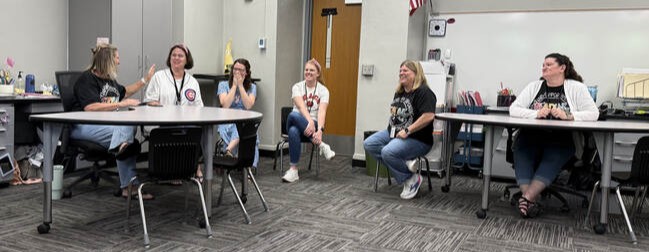
The team carved out data meetings tied to its progress-monitoring schedule, along with time for shared planning and vertical articulation. Educators review student progress, adjust instruction, and plan additional supports. Title I and literacy staff are at the table as integral members of the instructional team. Now everyone refers to the students as “our kids.”
“We’re setting intentional time aside to talk through the system we have in place, refine it, and review the data for kids to make sure we’re plugging the gaps and lifting as many kids as we can,” Nelson said.
The Confidence to Keep Going
Test data soon validated the work. Howard’s IREAD pass rate jumped to 100% for the 2024-25 academic year. Students demonstrated stronger foundational literacy skills on DIBELS and ILEARN proficiency increased in both English language arts and math.
But the numbers tell only part of the story.
Schoolman recalls one first grade student who arrived with significant literacy delays after entering kindergarten late. Quiet and reluctant to participate, he began the year in the lowest OG group. As his skills grew, so did his confidence. By year’s end, he had reached the highest performance level on DIBELS.
“When he started this year in differentiated, there were five kids in his group,” Schoolman said. “He had to participate. He had to learn. Without doing all of that, we don’t know where he would be. He is so much happier. He’s more confident.”
Vanosdell has noticed another important change.
“He has a smile on his face,” she said. “He would kind of shrink into himself at the beginning of the year and now he kind of walks with his shoulders back.”
He wasn't the only one gaining confidence. So was the staff.
"We as teachers were able to feel like we were meeting the needs of the kids that we had," Title I teacher Vicki Eller said. "We really were able to home in on what they needed."
Now the same language echoed from classroom to classroom, creating a more consistent experience for students and a stronger instructional framework for teachers to build on across grade levels. As teachers refined their practice together, collaboration became less about implementing a literacy initiative and more about how Howard approached improvement as a school.
"For me as an administrator looking at things, the biggest ripple effect has been the way that teachers and staff collaborate and talk about kids. And it's not just tied to literacy," Nelson said.
"We're able to take what we've built in literacy and apply it to anything," Murphy said. "Explicit instruction. The power of practice. All of these things that we've been learning about aren't just in an isolated box of literacy."
For Vanosdell, it's a striking shift. The school she once described as "disjointed" now feels "connected.”
"As an administrator looking at things, the biggest ripple effect has been the way that teachers and staff collaborate and talk about kids." - Principal Jordan Nelson
The Next Domino
Literacy may have been the first domino, but it won’t be the last.
The team at Howard Elementary is already carrying the same “all hands on deck” approach into new work across the school—from advancing STEM and scaling preschool to expanding its literacy work into the upper grades. The work isn't any easier. Howard has simply built a culture that makes it possible.
“Sometimes what’s best for kids is what’s hardest on us. We need to be vulnerable enough to say that,” said Vanosdell. “But we’re a team and we can do hard things together.”