School-Wide Practice Change
Back-to-Basics Approach Drives Big Gains at South Central Elementary

South Central Elementary had every reason to feel good about where it stood. Test scores were traditionally strong. The school maintained an A rating under Indiana’s previous accountability system. By most measures, things were working.
But sometimes “good” hides opportunities to get better.
When scores began to slip, Principal Nick Kimmel and his staff started taking a closer look. Students could perform computations, but their number sense wasn’t as strong. In reading, comprehension emerged as a concern. The school needed a better way to pinpoint where students could use additional support and respond more precisely.
Moving forward, the team realized, was going to require taking a step back—to basics.
As part of CELL’s 25th anniversary, the Celebrate Your School Awards spotlight schools across Indiana advancing teaching and learning in innovative and ambitious ways. South Central Elementary in Union Mills earned the honor for a school improvement approach that pairs instructional fundamentals with a much stronger use of data. That combination is helping teachers sharpen instruction and contributing to significant academic gains.
Sometimes “good” hides opportunities to get better.
Learning to Look Closer
While South Central’s students were building their literacy skills, teachers were developing a different kind of literacy of their own: data literacy.
Kimmel wanted staff to move beyond giving an assessment, recording the score, and moving on. The goal was to understand what the numbers were actually saying about students—and use that information to decide what happened next.
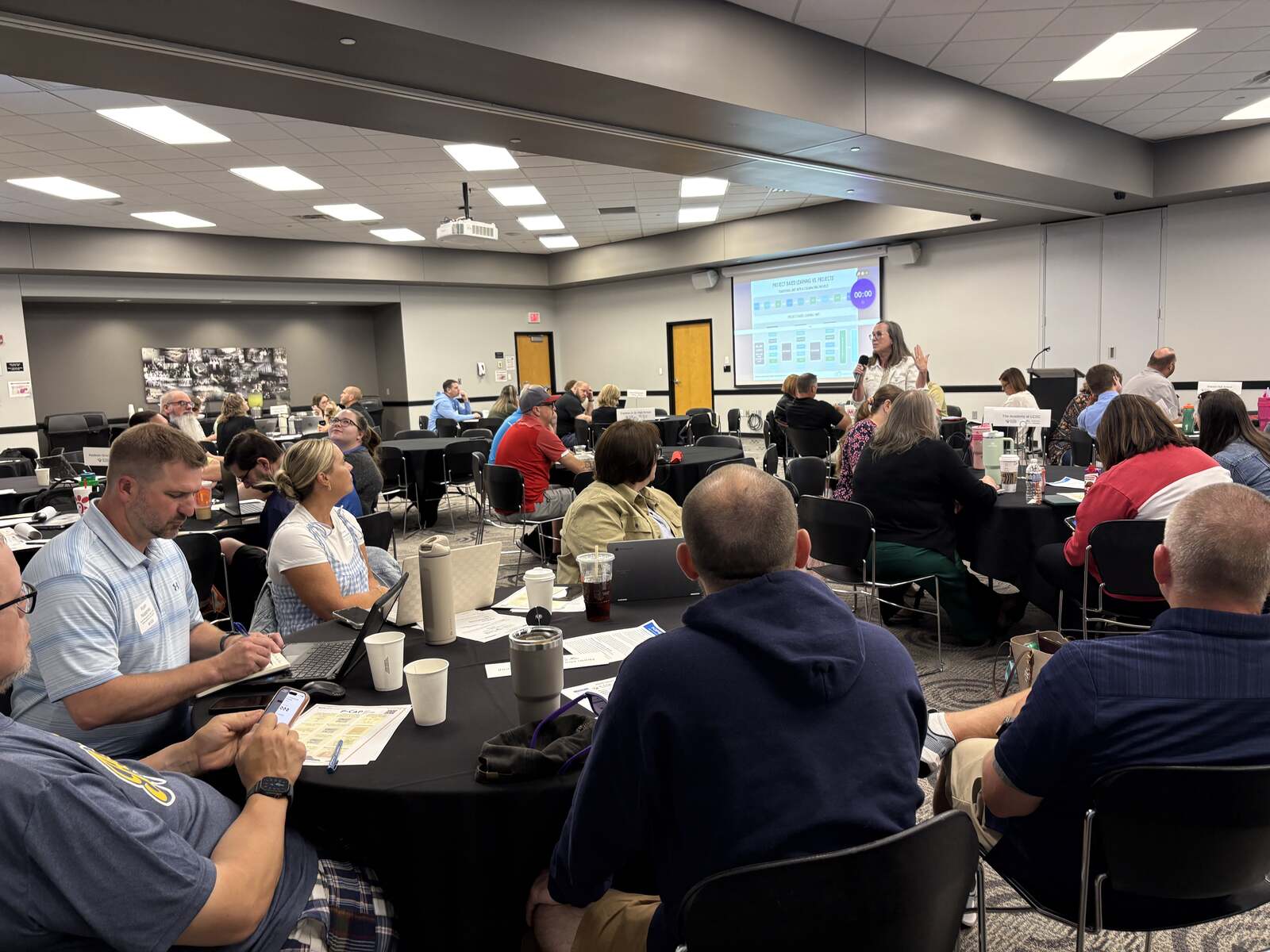
The team began aligning school improvement goals, professional development, and staff meetings around more targeted use of data. Weekly professional learning community (PLC) time gave teachers space to look at standards and results together, both within and across grade levels.
The same thinking reshaped the school’s multi-tiered system of supports (MTSS). Rather than bringing a student to the support team with a general concern, teachers came prepared with specific information about where the student was struggling. A small group worked with the IEP Technical Assistance Center to redesign the process, then gradually rolled it out across the school.
The goal was understanding what the numbers were actually saying about students—and using that information to decide what happened next.
The shift didn’t happen overnight. Kimmel remembers a time when asking teachers to pull up their data might be met with, “What’s my login?” Today, teachers enter the information themselves, help choose the assessments that are most meaningful for their grade levels, and discuss how much weight different measures should carry.
The data has become less about numbers on a spreadsheet and more about what those numbers help teachers notice. Sometimes they confirm what educators suspect. Other times, they challenge those assumptions.
“It’s often with the quiet kids,” Kimmel said. Students who might not naturally stand out now have data speaking on their behalf.
As teachers grew more confident in spotting who needed help, the next task was making sure the instruction that followed provided it.
Back to the Basics
One of South Central’s biggest steps forward came from revisiting the fundamentals.
When the school joined the Indiana Literacy Cadre, Kimmel and the school’s literacy coach received a copy of Anita Archer’s “Explicit Instruction.”
“I jumped on that,” Kimmel said. “The literacy coach and I looked through that and immediately thought, ‘This makes sense!’ It was really going back to the basics.”
They started sharing pieces with the staff. For many of the educators, the ideas felt surprisingly familiar.
“We used to do this,” teachers told Kimmel. “This is just good teaching.”
That reaction stuck with him. Clear modeling. Guided practice. Frequent checks for understanding. Making sure students were ready before moving on. South Central wasn’t looking for a flashy new approach as much as returning to practices supported by both research and classroom experience.
Then they added the data layer.

The Cadre reinforced that methodical, evidence-based way of thinking, and those practices quickly stretched beyond literacy. Around the same time, South Central adopted a math curriculum with a greater emphasis on number sense and mathematical processes. Explicit instruction, more deliberate use of data, and a clearer understanding of student needs began working together across subject areas.
In addition to posting IREAD scores above 95% for the 2024-25 school year, South Central reached 68.4% proficiency in math on ILEARN, an increase of 8.3 percentage points from the previous year and 23 percentage points above the state average.
Kimmel is careful not to credit one program or change for the gains. South Central’s progress came from several pieces moving together, with perhaps the most important being a staff increasingly comfortable challenging whether “good” was really good enough.
From Statistics to Students
With staff getting better at identifying learning gaps, the team needed to rethink who was responsible for closing them.
South Central employs instructional assistants, interventionists, special education staff, and other specialists who provide important support. But the school has worked to move away from the idea that a student who needs extra attention becomes someone else’s responsibility.

Kimmel challenged the staff to improve what was happening inside the classroom first.
“We should give students the best instruction in Tier I. If that isn’t enough, then we’ll intervene with them more frequently in a smaller setting,” Kimmel said. “But making that happen took data analysis and data literacy. It took cutting out things that might not need to be there. It required setting the expectation that ‘You, as the teacher, need to move the student to where they need to be.’”
Now staff members talk about students and data without waiting for a formal meeting with the principal. Teachers frequently recognize colleagues who consistently present data-informed recommendations. They notice outliers, dig into what they see, and adjust together.
“I feel like 100% of the staff has grown in their data literacy,” Kimmel said. “It just wasn’t part of the conversation before, and it’s been a real aha moment for us.”
“I feel like 100% of the staff has grown in their data literacy. It just wasn’t part of the conversation before, and it’s been a real aha moment for us.” - Nick Kimmel, Principal, South Central Elementary
Just Keep Going
Kimmel didn’t attempt to change everything at South Central all at once. He started with people who were willing to try something new, gave ideas room to prove themselves, and let teachers who saw results help bring others along.
That gradual approach built schoolwide ownership. Ask Kimmel why it worked at South Central and he doesn’t point to a curriculum, assessment, or process.
“It is because of the staff,” he said.
South Central has a mix of veteran and newer teachers who bring different experiences and perspectives to the work. Kimmel credits people who were willing to learn, adapt, and step into key roles as the school moved forward.
“The students are the easy part,” he said. “The staff have to buy in, and they did pretty early on.”
When offering South Central’s blueprint to other schools, Kimmel’s advice comes from experience: Start small. Know where you want to go. Be knowledgeable about the work. Find key people willing to pilot something new. Be prepared to adjust along the way.
Above all, just keep going.
“Keep moving in that direction,” Kimmel said. “No matter the opposition.”
South Central plans to do just that. Its Celebrate Your School Award will support professional learning and resources focused on math intervention and brain-based math instruction—giving teachers another opportunity to deepen the work in an area where they are already seeing promising results.
It’s fitting for a school that has learned not to treat a test score or letter grade as the end of the story.
At South Central, good results now lead to better questions.